New book out now - click on image for more details, including where to get it
Showing posts with label Blackheath. Show all posts

Friday, June 28, 2024

Vietnam Solidarity in Blackheath 1966

An interesting item from a July 1966 edition of the Vietnam Solidarity Campaign bulletin, published to mark its founding conference that year. It includes an announcement that 'the South East London Centre for Socialist Education is organising a summer fair to buy arms for the National Liberation Army of Vietnam', an event to include an art exhibition, poetry reading, live jazz and Indian classical sitar. The venue address was 7 The Glebe, Blackheath, London SE3. 


Another local detail - the National Council of the VSC included Ted Knight, attending the conference as representative of Lewisham Trades Council and later Leader of Lambeth Council.

The Centre for Socialist Education was a national initiative associated with The Week newsletter, an attempt to develop a non-sectarian independent socialist project to the left of the Labour Party. Its founders included Ralph Miliband, Marxist academic and father of later Labour leading lights Ed and David.  There were various other local branches including in Croydon, the SE London Group  being set up at a meeting at same Blackheath address in January 1966.

The Week, 27 January 1966

The Week, 17 February 1966

Those named as involved included Inge Westergaard (secretary of the group), John Westergaard (sociologist and later co author of the classic 'Class in a Capitalist Society'), Tony Stone and Malcolm Caldwell (chair). The latter was a prominent figure on the left who was for a while chair of the Campaign for Nuclear Disarmament. In the 1970s he stood for Labour in Bexley Council elections but came to a tragic end as a result of his support for the brutal Cambodian regime of Pol Pot and the Khmer Rouge. Caldwell, like Noam Chomsky at the time, refused to believe reports coming out of Cambodia of atrocities and he went to visit in 1978. Shortly after a meeting with Pol Pot he was murdered by his henchmen, though the exact circumstances are unclear. A few days after his death Pol Pot was deposed by invading Vietnamese forces - successor to the very national liberation army of Vietnam fundraised for in Blackheath 12 years earlier.

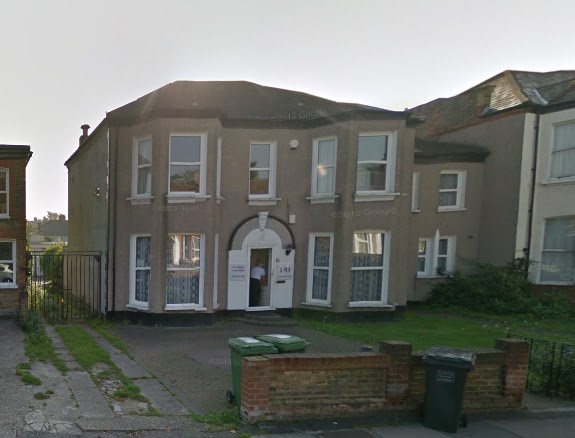
(Not sure if 7 The Glebe in Blackheath was a private residence at the time or some kind of public venue, but wonder if it was where Caldwell lived as it is given as  his contact address here)


Tuesday, February 20, 2024

WW2 Peace Shop in Blackheath: 'War will cease when men refuse to fight'

During the Second World War, as in the First World War, there were pacifists who refused to serve in the armed forces because of their political and/or religious opposition to war. Many of these war resisters suffered time in prison, while others recognised as conscientious objectors were officially excused on the basis that they agreed to undertake non-military duties.

The main journal of the peace movement, then and now, was Peace News which was founded in 1936. Its entire run has now been digitised on Internet Archive and it is a fascinating treasure trove of historical material. I have already found some South London nuggets and no doubt you can find plenty more.

Here's one interesting story... the Blackheath Peace Shop, which ran at 14 Royal Parade from late 1938 until mid 1940. It was seemingly set up by local branches of a number of pacifist groups including the Peace Pledge Union, the Fellowship of Reconciliation, the Anglican Pacifist Fellowship and the Society of Friends (Quakers).

Peace News, 5 April 1940

In the early days of the Second World War it was opening daily between 10 am and noon, and 3 pm and 5 pm, with Sunday afternoon tea parties followed by open air meetings on Whitfield's Mount on Blackheath.

Peace News, 22 September 1939

The shop did though face hostility, with a window being smashed in May 1940 at this 'centre of pacifist activity in the neighbourhood':

Peace News, 3 May 1940
:
The shop also featured in a court case in which six officials of the Peace Pledge Union were prosecuted in relation to a poster reading 'War will cease when men refuse to fight. What are you going to do about it?' The poster was said to have been on display in various locations including on a board outside 1a Eddystone Road in Brockley (the HQ of the Forest Hill branch of the PPU) and outside the Peace Shop in Blackheath. The location near to the Heath where 'service men resorted' was cited as evidence for the serious charge that the poster was intended to incite 'disaffection' in the armed forces.


The trial ended with the defendants being ' bound over' after the Peace Pledge Union agreed to withdraw the poster. A verbatim account of the 'Poster Case' trial was published as a pamphlet by the PPU later that year. One of those summonsed to court was Ronald Smith, of Courtrai Road SE23, described as the 'group leader' of the PPU's Forest Hill branch.

Peace News, 7 June 1940

Shortly afterwards it was reported in the Lewisham Borough News that 'Blackheath's little Peace Shop' had closed down after having its window broken again.


The PPU remained active in Blackheath however, with its local branch meeting at the home of its secretaries Alan and Winifred Eden-Green  of 2 Talbot Place SE3. As well as supporting 'distressed COs' they set up a Pacifist Service Unit to provide welfare help in the local community.  Alan Eden-Green (1916-1997) was  a conscientious objector during the Second World War who 'performed voluntary work for Woolwich Council in the blitz, driving mobile canteens and putting up Anderson shelters for the elderly' (obituary in Independent, 12 December 1997).  Winifred Eden-Green worked as assistant to author and prominent pacifist Vera Brittain through the war years and on to 1962. The Eden-Greens later edited a collection of Brittain's war time letters  in which they recalled that 'two attempts were made to set the Blackheath Peace Shop on fire' and that an Army Major had threatened to shoot them both (Testament of a Peace Lover: Letters from Vera Brittain, Virago, 1988).

Peace News, 15 November 1940

The former Peace Shop at 14 Royal Parade has most recently been home to Yield Gallery.


Sunday, August 29, 2021

Extinction Rebellion back on Blackheath - if not now, when?

As part of this month's Extinction Rebellion 'Impossible Rebellion' in London, some supporters have been camping out on Blackheath, as they did in 2019 and as their Climate Camp predecessors did back in 2009.


'If not you, then who? If not now, the when? Demand Climate Action'


'Let's nurse the earth'


'Welcome to Blackheath Camp', a Greenwich XR leaflet, and a flyer promoting demonstration against Silvertown tunnel on 24 September. 


Noticeboard at site with some interesting local history details - the Palatine refugee camp on Blackheath in 1709 (German refugees from war with France); the Women's Suffrage Pilgrimage on Blackheath in 1913 and George Wilson, the 'Blackheath Pedestrian' whose attempt to walk 1000 miles on the Heath in 1815 was scuppered by magistrates.


The camp on Blackheath and associated protests in London demanding action on climate change are expected to continue until end of week beginning 30 August 2021.


Saturday, January 30, 2021

Blackheath Modernist Houses Walk

Designer and author Stefi Orazi has produced 'Perambulations', a series of  risograph walking guides to modernist houses covering different parts of London (and indeed Brussels). As a lockdown treat we explored Blackheath with map in hand, an area known for 20th century housing from Span Developments 'as well as several individual houses by Britain’s most revered modernist architects including Peter Moro, Patrick Gwynne and Walter Greave'.


(detail from map)

Yes we saw lots of cool modernist buildings and some very grand older ones too. But the real adventure to be had from following somebody else's map is that it takes you to places you haven't seen before. I thought I knew Blackheath reasonably well but there were whole streets and estates I was unaware of.

Morden Road SE3


Sometime Labour Prime Minister James Callaghan lived at 17 Montpelier Row SE3 in the 1970s. Looks to me like the picture below may have been taken at back of the house.


(The latest in the Perambulations series covers West Dulwich and Forest Hill) 

Monday, October 26, 2020

Jane Austen passes through Deptford & Blackheath

I love the notion that as the main road between London, Kent and the Channel, what is now the A2 has been travelled by so many historical personages and movements - everyone from royals to revolting peasants have passed along the Old Kent Road, New Cross Road, Deptford and up to Blackheath and beyond. So I am pleased to be able to add the novelist Jane Austen to the list confirmed to have passed through.

On June 15 1808, Austen wrote a letter to her sister Cassandra describing her journey from London to visit her brother's family at Godmersham Park - located between Canterbury and Ashford in Kent:

'My dear Cassandra,—Where shall I begin? Which of all my important nothings shall I tell you first? At half after seven yesterday morning Henry saw us into our own carriage, and we drove away from the Bath Hotel; which, by the by, had been found most uncomfortable quarters,—very dirty, very noisy, and very ill-provided. James began his journey by the coach at five. Our first eight miles were hot; Deptford Hill brought to my mind our hot journey into Kent fourteen years ago; but after Blackheath we suffered nothing, and as the day advanced it grew quite cool. At Dartford, which we reached within the two hours and three-quarters, we went to the Bull, the same inn at which we breakfasted in that said journey, and on the present occasion had about the same bad butter.

At half-past ten we were again off, and, travelling on without any adventure reached Sittingbourne by three. Daniel was watching for us at the door of the George, and I was acknowledged very kindly by Mr. and Mrs. Marshall, to the latter of whom I devoted my conversation, while Mary went out to buy some gloves. A few minutes, of course, did for Sittingbourne; and so off we drove, drove, drove, and by six o'clock were at Godmersham'

The Bath Hotel in London was situated on Piccadilly on the site of what is now the Ritz.  Plainly travelling by horse-drawn coach was a slow business, with the journey from here to Godmersham taking some ten and half hours - though this did include stops at the Bull Inn in Dartford and the George Inn in Sittingbourne, both of which are still standing if you want to recreate this journey!  The house at Godmersham Park is still there too - and it features along with Austen on the ten pound note.

Another letter from 1796 mentions a plan to visit Greenwich.  Her brother Francis Austen was in the Royal Navy and rose to the rank of Admiral of the Fleet, so no doubt was familiar with Deptford and Greenwich.

Another South London location is mentioned in a letter from 1811: 'who should I meet but Mr. Moore,  just come from Beckenham. I believe he would have passed me if I had not made him stop, but we were delighted to meet. I soon found, however, that he had nothing new to tell me, and then I let him go.'  There was a strong connection between parts of Austen's family and Beckenham. Her dad's cousin Frances Motley Austen (1747-1815) was born in Beckenham, with his mother Ann Motley and grandfather Thomas Motley - a prominent landowner in Beckenham.  So it seems likely that Jane Austen was in touch with relatives in Beckenham, though it is not known if she ever visited there. 

Source: The Letters of Jane Austen. 

Thanks to JaneAustenCork for mentioning this journey on twitter

Monday, August 26, 2019

Extinction Rebellion on Blackheath

Last weekend (17-18 August) saw local supporters of the climate change movement Extinction Rebellion stage a series of protests, workshops and other events in Greenwich and Blackheath.

The weekend started on Saturday morning (17/8/2019) with a  couple of hundred people joining a procession from the Cutty Sark in Greenwich, up through Greenwich Park and on to Blackheath.


'Towards the Common'

A key local focus is opposition to the planned new Silvertown Tunnel river crossing, which campaigners say will simply increase traffic. On 9 August 2019 a protest blocked traffic in the Blackwall Tunnel area.

In Greenwich park


Briefly stopping the traffic on the A2 across Blackheath


Tents set up on Blackheath for the weekend gathering (scene also of the Climate Camp ten years ago)

'South East London Rebel Rising'
Local Extinction Rebellion groups have now now been established in Lewisham, Greenwich, Southwark, Lambeth, Bexley and Bromley.  Along with other groups across the country they are now planning for a major action in central London in October

Monday, August 07, 2017

Music Monday: Joel Culpepper

SE London soul singer Joel Culpepper has been getting lots of attention recently on the back of his new Tortoise EP. He was on Gilles Peterson's BBC 6Music show a few week ago and gave a shout out to Lewisham.

His collaborators on the EP include legendary Chicago house producer Roy Davis Jr. (responsible for garage anthem Gabriel), with whom he has written 'Afraid to be King', newly released as a single this week and already getting lots of airplay from Lauren Laverne and others.


'It don't mean I'm in love' was produced by Jimmy Hogarth, who has worked with Duffy and Amy Winehouse among others. The video features Blackheath and the LP Bar in New Cross Road - and an implicit message that when a guy say 'let's take it slow' he actually means 'I can't commit as I have a string of women across town'.


Friday, May 26, 2017

Beating the Bounds in Penge and Lee

On this day in 1881, a 'beating the bounds' procession took place in Penge. As reported in The Beckenham Journal and Penge and Sydenham Advertiser, Wednesday, June 1, 1881:

'The ancient custom of beating the bounds was observed with all due ceremony in Penge on Thursday the 26th being Ascension Day. Some 18 boys from various schools in the Hamlet, with willow wands, to which were attached ribbons and bells, started from the Vestry Hall shortly after 10 o'clock in the morning, under the direction of Mr C.W. Dommett, the vestry Clark, and Mr A. Wilson, assistant overseer, many of the vestry men being also present and joining in the procession. The party was followed by a wagonettte containing ladders etc required to surmount some of the obstacles which were encountered. At important points of the boundary the custom of "bumping" was duly observed, to the great delight of the boys, if not of some of the elders. During the journey the party availed themselves of refreshments kindly provided for them at the residences of Dr Gibbes and Messrs T. Bugler and W. Matthews. Fortunately the weather was fine, or the day would have been far from pleasant for those concerned. A number of the overseers, vestry men, and others interested in the hamlet met at the vestry Hall in the evening and partook of an excellent dinner'.
 
Beating the bounds processions took place in many parishes until the 19th century. According to folklorist Steve Roud they involved 'walking around the boundaries of the parish both to check that there had been no encroachments or illegal building, and to make sure that everyone knew the extent of the parish in detail... In the days before accurate maps, it was essential that the knowledge of boundaries was passed on to younger generations... The participants often carried flexible wands, and when they reached a particular boundary marker they would literally beat it with their sticks. In many cases, boys were whipped with the wands at each stone, or bumped on them, or even held upside down. Sometimes they were encouraged to run on ahead to find the next marker and the first one there was rewarded. It was also thought important, even perhaps legally binding, that the whole of the boundary be followed, at least by a representative. Boys were therefore useful to scale walls, crawl through hedges, wade through ponds – wherever the official boundary took them' (Steve Roud, London Lore, 2008).
 
Roud also mentions that Penge was 'for centuries a detached part of Battersea parish given to them in the year 957'. The parish records of St Mary's Church, Battersea, record officials 'agoeing the bownds of the parish at Penge' in 1661 and on other occasions.
 
Beating the Bounds processions have been revived in a number of places in recent years as a way of celebrating local history and geography. In Penge, there is a  Beating the Bounds walk on Sunday 4 June starting at 2.30 pm from  Alexandra Nurseries, 56B Parish Lane, SE20 7LJ. In recent years there have also been Beating the Bounds processions in Nunhead, and in Lee where last month (April 22) Dacre Morris and Blackheath Morris beat the bounds of the old Dacre estate.
 
Dacre Morris beating the bounds April 2017


Sunday, July 31, 2016

Tony Benn, Allan Boesak & Squeeze commemorate Peasants Revolt on Blackheath 1981

A picture posted as part of the ongoing argument within the Labour Party has prompted me to dig up an episode in local history - the commemoration of the 600th anniversary of the 1381 Peasants Revolt, held on Blackheath in 1981.
 
Jolyon Green published a crowd scene on twitter with the caption 'Huge crowd in Lewisham for Tony Benn before 1983 election (Spoiler: Labour lost both seats to the Tories in 1983)'. Subsequent discussion on twitter seems to have narrowed this down to Blackheath in 1981, within the borough of Lewisham.


Tony Benn did indeed address a crowd there, the occasion being an event to commemorate the 600th anniversary of the Peasants Revolt. In 1381 the rebels had gathered on Blackheath before heading into London, so it was an obvious place for the commemoration on May 4th 1981. As well as speakers there was music on this May Day bank holiday from Squeeze, Frankie Armstrong & Leon Rosselson, Traitors Gait, Rubber Johnny, Bluebird and Icarus. So it was more of a festival than just a political rally, and certainly not specifically a 'Bennite' rally.
 
 
Other speakers included Jack Straw - pictured below with Benn and the young Will Straw at the Blackheath event - and Canon Paul Oestreicher, then parish priest at the Church of the Ascension in Blackheath. The latter is an interesting figure who was chair of Amnesty International, hence no doubt the continuing connection between that church and Amnesty (a great Amnesty book sale takes place twice a year at the church).
 
Allan Boesak, the South African anti-apartheid activist, gave a liberation theology-inspired sermon taking as his starting point John Ball's 1381 Blackheath sermon with its famous statement 'Matters shall not be well in England until all things are held in common' (Boesak's Blackheath sermon is included in his book 'Black and Reformed: Apartheid, Liberation and the Calvinist Tradition').


Does anyone have any memories of the 1981 event?
 
As for its contemporary political relevance, I don't want to get into internal Labour politics here. Jolyon Green's point seems to have been that large left wing rallies do not necessarily translate into Labour winning elections. It is a little misleading to compare Blackheath in 1981 to a current day rally of Corbyn supporters, the former was as we have seen a broader cultural festival, the crowd weren't there just to listen to Tony Benn. But it is historically accurate to note that despite the left sometimes being able to mobilise large numbers on the streets in that period (maybe 250,000 at London Campaign for Nuclear Disarmament demo in 1981, where Benn also spoke) it was the Tories who won the 1983 general election by a sizeable majority.
 
Lewisham East was won in 1983 by Colin Moynihan, who went on to be the Conservative sports minister at the time of the Hillsborough disaster. Moynihan's victory was no doubt assisted by the fact that Polly Toynbee stood in the constituency for the short lived Social Democratic Party, which had split from Labour to join with the Lib Dems. Lewisham West was won by John Maples who, like Moynihan, held his seat for the Conservatives until losing it to Labour in the 1992 election. 

Tuesday, April 12, 2016

Ben Smith - Cityscapes


CITYSCAPES is an exhibition of paintings and drawings by Ben Smith at Xavier White’s Gallery in Blackheath:

'Ben Smith draws and paints the urban fabric of South London, drawing from life and creating paintings in his studio, aiming to portray the depth, repetition and interchangeability of the contemporary cityscape.  The works exhibited at Xavier White’s front room gallery capture a city in flux, caught in the cross currents of redevelopment, displacement and demolition.

Ben trained at Central Saint Martins in the 1990s. He has exhibited in group shows in Brick Lane, Camberwell and Peckham. This is his first London solo show.


Elephant I - Ben Smith


Elephant II - Ben Smith


View of Southwark - Ben Smith


Cityscapes is at Xavier White’s Gallery, Top Flat, 26 Vanbrugh Park, Blackheath, London SE3 7AF. Until May 6th. To view the exhibition call Xavier 07 88 99 72 374

Thursday, April 07, 2016

Socialist Opposition to World War I - exhibition and talk in Blackheath

Interesting event coming up next week:

'St George's Church in Westcombe Park is pleased to host a showing of a free educational exhibit entitled "Socialist Opposition to World War I". The exhibit runs all day on Friday 15 and Saturday 16 April in the nave of the church, located on Glenluce Road in Blackheath, SE3 7RZ.

On Friday 15 April at 7:30 pm there will be a lecture by Prof Mary Davis, Visiting Professor of Labour History at Royal Holloway University of London, and creator of the exhibit. She has written, broadcast and lectured widely on women’s history, labour history, imperialism and racism. She was awarded the TUC women’s Gold Badge in 2010 for services to trade unionism. Refreshments will be available throughout the exhibit.

As we consider the causes and legacy of that terrible conflict, we commemorate those who served, those who never returned, and also those who opposed the war due to conscience.The exhibit was created through the auspices of the Marx Memorial Library and is funded by the Heritage Lottery Fund'.

(facebook event details here)


Tuesday, February 09, 2016

'The raiders left behind a black silk mask' - IRA attacks in Catford, Blackheath & Tooting 1921

During the Irish war of independence (1919-1921) there were armed attacks in London linked to the conflict, in the lead up to the truce agreed in July 1921 that paved the way for independence for most of Ireland. Here's a report of a series of attacks in May of that year in South London, from The Times (16 May 1921).

On Saturday May 14th 1921 'Between 10 o'clock and midnight', 'a series of outrages, believed by the police to be the work of Sinn Fein agents in this country, took place in Outer London. They were all the work of armed parties of men, and in the majority of cases there was proof that the incidents had a direct connexion with the troubles in Ireland..

Two masked men tried to force their way in to the residence of Mr Charles F Duffield, a double fronted house, 141 Wellmeadow Road, Catford, standing in the heart of the St Germans estate. As the result of the attack, Mr Duffield, aged 61, is in Lewisham Hospital with a bullet through both thighs, and his wife, Edith Mary Duffield, has a bullet wound through each wrist... The raiders left behind a black silk mask, a bicycle pump and a heavy revolver with four live cartridges in it'.(The Times speculates that this was a case of mistaken identity as the Duffield did not appear to have any connections to Ireland).

141 Wellmeadow Road SE6 - now the London Stage School,
scene of  a non-fatal shooting in 1921
Four armed men attempted to force their way in to a house in 'Halstow Road, Westcombe Park, Blackheath, at the house of an officer in the Royal Irish Constabulary, who is at present serving in Ireland'

'At Tooting an attack was made by a number of armed men on a house in Coverton Road, occupied by Mr William Dawner, whose son is in the RIC. The knocked at the door, and when it was opened, drew revolvers and forced their way inside. When they were inside, they produced bottles of petrol, which they poured over the floors of various rooms. They then set fire to the place'

Saturday, November 15, 2014

Two Book Sales

A sign of a good secondhand booksale is when you come home with as many books as you can carry but still finding yourself thinking about a book that  you wish you had bought. In my case that would be a nice hardback edition of 'Giordano Bruno and the Hermetic Tradition' by Frances Yates which I once left behind at the Amnesty International booksale in Blackheath. Never mind they've got another one coming up next week:

Amnesty Book Clearance Sale, 10am-4pm Saturday 22 November
Church of the Ascension, Dartmouth Row, London SE10 8BF (10 minutes walk up Lewisham Hill from Lewisham National Rail and DLR Station).

'Simon Ware, Vice Chair of Amnesty's Blackheath and Greenwich Group , said :“The local group has collected thousands of books from a variety of sources, including publishers and book reviewers as well as individual donors. The quality of books – many of which are brand new – is exceptionally high, and there will be plenty of bargains to be found, from second-hand paperbacks to review copies of recently-published novels.”  The group’s book sales, now in their 40th year, are established as Amnesty International’s most successful local fundraising event in the UK, raising more than £275,000 over the years. They are a much loved event for many in the local area and often there is a queue of people waiting to get into the event when the doors open'


Meanwhile New Cross Learning are having a Big Book Sale tomorrow from 2 to 5 pm. They promise: 'Thousands of books from 30p! Second hand, vintage, antique and new. Also CDs and DVDs. Come to NXL on Sunday 16th November and go home richer'. At 282 New Cross Road.

Monday, June 16, 2014

Amnesty International and Lewisham Pensioners Forum Book Sales

Two of South London's great regular charity book sales coming up in next few weeks.

Amnesty International's Blackheath summer booksale is on Saturday 21st June at the Church of the Ascension, Dartmouth Row SE10 8BF from 9 am to 5 pm. 

A couple of weeks later on Sunday July 6th, Lewisham Pensioners Forum have their six monthly Big Book Sale at the Saville Centre, 436 Lewisham High Street, SE13 (by Lewisham Hospital) - free entry, prices from 20p for paperbacks and 50p-£2 (mostly) hardbacks.  Plus tea and cakes.

If you can't find some decent summer holiday reading at either of these, you might as well as give up.
  

Tuesday, May 20, 2014

Joan Littlewood (and Brendan Behan) in Blackheath

This year is the centenary of the birth of Joan Littlewood (1914-2002), one of the most influential figures in 20th century British theatre. Among many other things she founded the radical Theatre Workshop and directed iconic plays including Shelagh Delaney's A Taste of Honey and Oh What a Lovely War (1963).


Joan Littlewood - not sure when this photo was taken, possibly when she visited a Durham coal mine for BBC in 1938.

Littlewood was born at the Clapham Maternity Hospital, 41 Jeffreys Road, Stockwell and lived as a child at 8 Stockwell Road. In the 1950s and 1960s she lived in Blackheath with her partner Gerry Raffles. The 1958 electoral register has her listed as 'Joan Raffles', though I don't believe they actually married (she had earlier married Ewan MacColl, and was Kirsty MacColl's godmother).

1938 electoral register

They lived in the Mill House, an 1832 mansion on the Heath that was converted to flats at the time:

The Mill House Blackheath
(photo by APVG at Flickr)

 To protect their privacy in the late 1960s they had a plastic wall designed by Guy Hodgkinson at the bottom of their garden, as featured in a 1969 magazine:
From 'Design' (March 1969)

Littlewood played a critical role in the career of Irish playwright Brendan Behan. In September 1958, Behan stayed  in Blackheath. According to 'Brendan Behan: A Life' by Michael O'Sullivan, 'Littlewood had offered Brendan the use of her home to finish The Hostage', which she was directing at Theatre Royal Stratford.  Behan 'spent most of his time in The Dragon pub in Blackheath. He had an uncannny knack for finding like-minded boozers wherever he was in the world'. Not sure whether the Dragon is the George & Dragon on Blackheath Hill - not the nearest pub, but maybe that was the point as his drinking didn't go down well with Littlewood and Raffles who were worried whether he would finish the play on time.

Brendan Behan in Blackheath
(by Oswald Jones) - possibly in the Crown


Fun Palaces

In the early 1960s Littlewood, along with the architect Cedric Price, conceived of the idea of the 'Fun Palace', a never realised building that would be a ‘laboratory of fun’/‘university of the streets’ based on mass participation in art and science. Littlewood’s motto was “Everyone an artist, everyone a scientist.”and the original fun palace design said:  'Choose what you want to do – or watch someone else doing it. Learn how to handle tools, paint, babies, machinery, or just listen to your favourite tune. Dance, talk or be lifted up to where you can see how other people make things work. Sit out over space with a drink and tune in to what’s happening elsewhere in the city. Try starting a riot or beginning a painting – or just lie back and stare at the sky'.

Writer Stella Duffy* proposed reviving the idea of Fun Palaces to mark Littlewood's centenary, and on 4-5 October this year there will be at least 80 free 'pop up fun palaces', with the Albany in Deptford not only hosting one of them but also helping to organise the national programme (check map for your nearest event). Duffy's co-director is Sarah-Jane Rawlings, who helped to launched Meet Me at the Albany, the Albany’s artist led day club for the over 60s. 

(*Woolwich-born Duffy is of course the author of the great South London novel 'The Room of Lost Things' (2009) set around Loughborough Junction where she lives)

[thanks to Rosalind Hardie - https://twitter.com/adinnieken - for finding Littlewood's address and pictures following my request on twitter]