Showing posts with label 1920s. Show all posts

Saturday, July 23, 2022

Abdul K. Kpakpa-Quartey: a Pan Africanist in 1920s Borough High Street

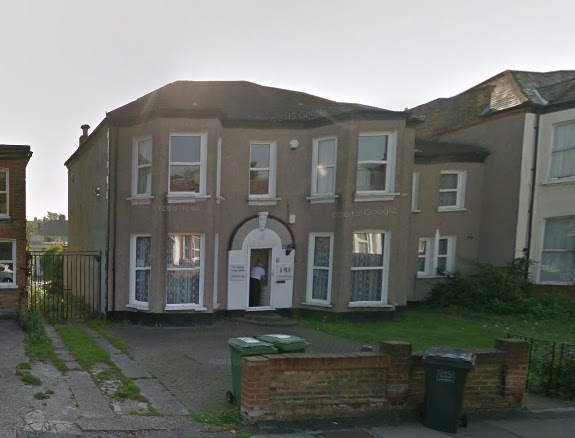
Recently I was browsing through the 1922 Post Office Directory in Southwark Archives, just looking at what was on Borough High Street one hundred years ago. One entry that caught my eye was for number 169 Borough High Street, listed as the address for three organisations: the Gold Coast National Aid Society, the Inter-African Moslem Association and the Ethiopian Society for Psychical Research. The secretary of all three organisations was said to be one Abdul K. Kpakpa-Quartey. 

Clearly there was a link with the Gold Coast (now Ghana), but the other organisations suggested a wider pan-African interest of the kind associated at the time with Marcus Garvey for whom 'Ethiopian' sometimes conveyed a sense of Africa as a whole rather than just the country itself. As explored here before Garvey himself stayed for a while on Borough High Street (numbers 71 and 176)  just before the First World War.

As for the psychical research angle, that sounds fascinating - the name presumably inspired by the Society for Psychical Research founded in Britain in 1882 to investigate all things paranormal. Sadly I haven't been able to find anything out about the Ethiopian version, but I have found a bit more about Kpakpa-Quartey.
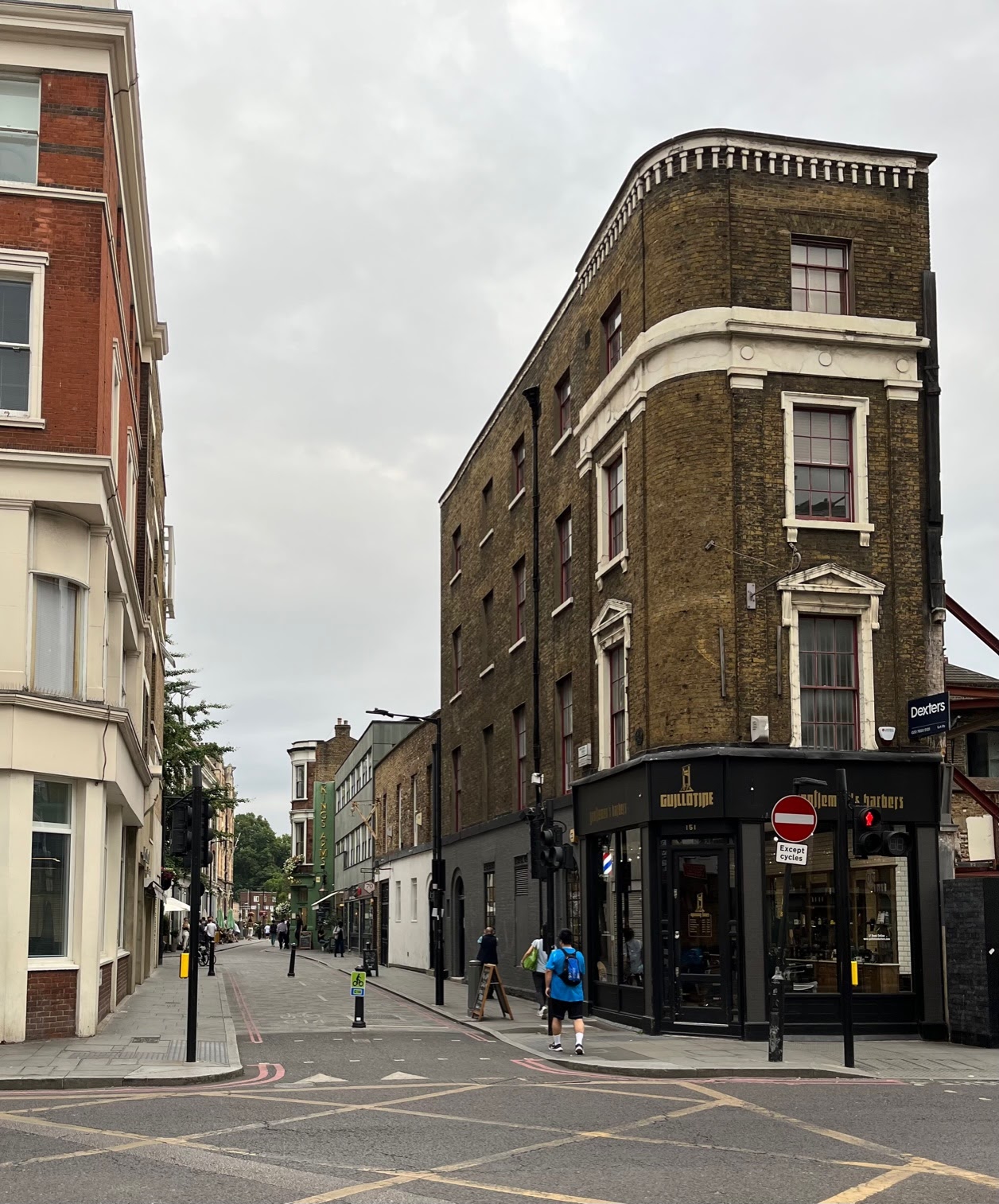
169 Borough High Street today (building on right)

He seems to have been a merchant from the Gold Coast/Ghana who settled in England from the 1920s to at least the 1950s. And he strongly opposed racism internationally, possibly with a link with Garvey's movement. In an an article published in the Islamic Review, May 1921, Professor Abdul Karim Kpakpa-Quartey writes:

'To-day in Christian America the God-created black man, notwithstanding his Christian affiliations, intelligence or social prominence, is a slave and a serf, perhaps worse than in the dramatic days of the world- famed Uncle Tom's Cabin. He or she is still liable to be brutally flogged, kicked, knocked, imprisoned, shot dead or lynched at the will and pleasure of the bloodthirsty and savage American Tin God. Can you imagine the striking contrast between Caucasian Christianity and Islam, the religion of humanity? So utterly preposterous and absurd and scientifically illogical is color prejudice that I will not waste time in controversy'

It seems likely that this was the same person who wrote a letter to Garvey's Negro World paper in 1921 complaining of the treatment of unemployed Somali seamen in England; the letter of 22/10/1921 was signed by 'Prof. Karim Abdul Kpakpa-Quartey' of the African Association [Source].

What Abdul traded in is unclear. At one time he was involved in a business partnership called United States Inter-Allied Commercial Syndicate, described as 'Export and Import Brokers, Merchants and Shipping Agents'. At the time of its dissolution in 1923 his address is given as 91 Altenburg Gardens, Clapham Junction (London Gazette, 12 January 1923)

Marcus Garvey's United Negro Improvement Association was a transnational organisation aiming to link black people across the world, with part of its platform being to assist a return to Africa for the descendants of slaves. Famously he attempted to establish a Black Star Line of ships to make this a reality. So Garvey would not doubt have been interested in linking with African shipping merchants with a similar perspective. 

Intriguingly another merchant from the Gold Coast with a similar name is recorded as speaking at a UNIA meeting in New York's Liberty Hall in 1919. This was Sam. G. Kpakpa-Quartey - was he a relative? His connection with the movement was a concern to the British authorities who wished to counter Black nationalist/Pan-Africanist influence in its colonies, whether in the West Indies or West Africa. Indeed this Kpakpa-Quartey is mentioned in a 1922 letter from Winston Churchill, then colonial secretary, concerning Garvey and the Black Star Line (source). 

As might be expected of an African traveller, the main official records I have found on Abdul K. Kpakpa-Quartey are on passenger lists maintained by immigration authorities.  A 1950 record has him travelling from Liverpool to Freetown, Sierrra Leone, while another from December 1956 records him boarding a Spanish ship in London heading to Las Palmas, Canary Isles.. His date of birth is given as 15/6/1895 and his address as 61 Albert Street, Newark, Notts. The Liverpool connection is interesting as another African organisation, the Native Union of Empire Africans, was founded there in 1935 by  one A.J. Kpakpa-Quartey (source).

A 1950s consular marriage record from Dakar, Senegal indicates that he married Flora Gabbidon who, as Flora Irene Kpakpa-Quartey (dob 10/4/1919), travelled from Liverpool to Takoradi (Ghana) in 1958 with her son Matthew Ibrahim born 1952 (source: Findmypast). 

That's all I know but I am sure there must be some more of his writings out there in yet to be digitised journals as judging by his Borough High Street office he was a very busy man. Today there are many people of Ghanaian heritage living in London so perhaps there might some interest in this Ghanaian activist from a century ago.

Tuesday, February 09, 2016

'The raiders left behind a black silk mask' - IRA attacks in Catford, Blackheath & Tooting 1921

During the Irish war of independence (1919-1921) there were armed attacks in London linked to the conflict, in the lead up to the truce agreed in July 1921 that paved the way for independence for most of Ireland. Here's a report of a series of attacks in May of that year in South London, from The Times (16 May 1921).

On Saturday May 14th 1921 'Between 10 o'clock and midnight', 'a series of outrages, believed by the police to be the work of Sinn Fein agents in this country, took place in Outer London. They were all the work of armed parties of men, and in the majority of cases there was proof that the incidents had a direct connexion with the troubles in Ireland..

Two masked men tried to force their way in to the residence of Mr Charles F Duffield, a double fronted house, 141 Wellmeadow Road, Catford, standing in the heart of the St Germans estate. As the result of the attack, Mr Duffield, aged 61, is in Lewisham Hospital with a bullet through both thighs, and his wife, Edith Mary Duffield, has a bullet wound through each wrist... The raiders left behind a black silk mask, a bicycle pump and a heavy revolver with four live cartridges in it'.(The Times speculates that this was a case of mistaken identity as the Duffield did not appear to have any connections to Ireland).

141 Wellmeadow Road SE6 - now the London Stage School,
scene of  a non-fatal shooting in 1921
Four armed men attempted to force their way in to a house in 'Halstow Road, Westcombe Park, Blackheath, at the house of an officer in the Royal Irish Constabulary, who is at present serving in Ireland'

'At Tooting an attack was made by a number of armed men on a house in Coverton Road, occupied by Mr William Dawner, whose son is in the RIC. The knocked at the door, and when it was opened, drew revolvers and forced their way inside. When they were inside, they produced bottles of petrol, which they poured over the floors of various rooms. They then set fire to the place'

Tuesday, July 07, 2015

Deptford and Lewisham on film, 1922

The BFI's new Britain on Film Archive, launched today, no doubt has many local treasures among its 25,000 films available to view online. My favourite so far is remarkable film tour of Lewisham in 1922, featuring lots of high street scenes, along with Deptford High Street, Ladywell park and other locations: 'This exquisitely detailed tour of the south-east London borough of Lewisham traverses town centre tramways and the Rivers Ravensbourne and Quaggy, gliding past ornate-signed outfitters and grander edifices like the Chiesman Brothers department store. We visit Deptford High Street and Catford, glimpse women workers leaving a Watney's bottling plant - and schoolboys practising their country dancing'. You can watch the whole thing here. Here's some stills to whet your appetite.

Ladywell Park Cascades

Children playing in the River Quaggy

Bray & Bray opticians, New Cross Road

Chiesman Brothers department store, Lewisham High Street

Munro & Co Drapers, 141-143 Deptford High Street


Thursday, August 01, 2013

History Corner: medical negligence in 1920s Deptford

In the 1920s a New Cross doctor was involved in a tragedy that led to his prosecution for manslaughter. Dr Percy Bateman lived at 423 New Cross Road and in July 1924 he was called in by a midwife to assist in a difficult childbirth. The mother, Mary Ann Harding, 'was the wife of a builder's labourer, and lived in Deptford in two rooms at the top of four flights of stairs. She was about 33 years of age, she had had four children before, their ages ranging from 13 to 4' (BMJ, 7 Feburary 1925).

The baby died and the mother, Mary Ann Harding, became very ill. Over the next week she continued to deteriorate and was visited twice daily by Bateman, who refused the request of Mary's husband and the midwife to admit her to hospital. When she finally was admitted she was found to be unfit for an operation and she died on the 30th July. It was discovered in the post-mortem that the doctor had mistakenly removed most of her uterus along with the placenta during the childbirth.

A jury found him guilty of manslaughter and he was sentenced to six months imprisonment in December 1924, but the Lord Chief Justice (Lord Hewart) quashed the conviction on appeal in February 1925 and he was released. The prosecution argued in the appeal that 'What impressed the jury was the callous neglect he showed. He did not call in another doctor, he took the uterus home with him, he concealed the facts of the matter from everybody who might be in a position to give help or advice' (BMJ 14 February 1925). But Bateman was largely backed by the medical profession who were concerned about the implications of doctors being jailed for negligence.

The appeal judgement in Rex v Bateman 1925 is still quoted today as it helped establish the definition of manslaughter in cases like this. The  Court ruled that simply causing the death of somebody was not enough to prove manslaughter, rather it was necessary to show that the accused 'showed such disregard for the life and safety of others as to amount to a crime against the State and conduct deserving punishment'.

Bateman died at his home in New Cross in 1936.

Friday, September 21, 2012

Sydenham School History


Sydenham School (Dartmouth Road SE26) is holding an event tomorrow to celebrate its 95th birthday, with music, performances, an art exhibition and more. It's a good school (a parent writes) which this year got its best ever GCSE results. Not to be confused with a similarly named private school not far away (Sydenham High).


Whatever your views about single sex education, the fact is that most secondary schools were primarily for boys until advocates of women's education founded schools like Sydenham. On its website there is a fascinating archive of school magazines going back to the 1920s which show how the winds of first wave feminism and suffragism blew through the streets of Forest Hill in the early days of the school.


In 1919-20, the History Club was seemingly where it all happened. A debate on 'The Entrance of Women into Parliament will be for the Welfare of the Nation' saw the motion proposed by Elsie Greenman 'carried by twenty-two votes to four'.  In June 1920 'Miss Dawson spoke on the subject of Guild Socialism'.

The image below is from The County Secondary School, Sydenham, Magazine and Chronicle, 1922:


Thursday, June 14, 2012

South London: Behind the Scenes of the Universe

In his entertaining shaggy-dog tale of a book 'The London Adventure or the Art of Wandering' (1924), Arthur Machen (1863-1947) mentions having 'some mission to execute in waste portions of the world down beyond the Surrey Docks. I took an omnibus at the other end of London Bridge and went, I think, by way of Tooley Street, into something unshapen that I had never visited before; into places that might have been behind the scenes of the universe; bearing, indeed, much the same relation to the ordinary London view as do the back of the backcloth and the backs of the wings to the gay set that the audience admires from the stalls. Everything was shapeless, unmeaning, dreary, dismal beyond words; it was as if one were journeying past the back wall of the everlasting backyard'.

Machen's whole point is that even here 'in this arid waste', his spirits were lifted by an unexpected fig tree , 'a veritable verdant mountain'. But his rather snotty attitude to South London is fairly typical of many writers on the matter of London in that period, and indeed in most periods. Still the idea of South London as 'behind the scenes of the universe' is not entirely inaccurate, since it was certainly true in Victorian and Edwardian times that much of the wealth which enabled Westminster and the City of London to flourish was created in or travelled through the factories, workshops and docks of  East and South London.

If London is a theatre, the eyes of writers may generally have been on the stage of royalty, 'high culture'  and parliament, but it is precisely 'behind the scenes' where the work is done that sustains the illusion.

Wednesday, May 09, 2012

History Corner: the New Cross Boys

Gangs are not a new phenomenon. In his book Gangs of London (2010), Brian McDonald mentions numerous South London teenage gangs from the 1950s: Balham Boys, Brixton Boys, Bermondsey Boys, Borough Boys, Rotherhithe Boys, the Elephant and Castle Boys, Wandsworth Boys, Lambeth Boys (yes it was a bit of a boy thing!). Then, as now, there was sometimes violent conflict between gangs - in 1953 for instance a gang fight on Clapham Common led to the death of 17 year old John Beckley.

New Cross Boys

According to McDonald, 'perhaps the largest of London's 1950s teenage gangs, the New Cross Boys... roamed from Canal Bridge to Deptford, causing mayhem at Millwall Football Ground, youth clubs, cinemas and dance halls. The only noted puncher among them was Freddie 'Ginger' Simmonds, who gave a creditable performance in a stand up fist fight with future gangster Eddie Richardson. This occurred on a snow-filled pavement outside the Trocadero cinema at Elephant and Castle, after a snow ball fight got out of hand... In a clash with rivals from Peckham's Goose Green, over 200 teenage youths fought running battles over a period of three days in 1956'.

In another of his books, Elephant Boys, McDonald mentions a fight involving the New Cross Boys in the New Cross House pub.

Deptford Red Hands

He also mentions 'An earlier Deptford gang, the Red Hands, so named for the red armband that identified members, came unstuck in 1926 when one of their team was stabbed to death after attacking a rival Rotherhithe Boy. William Shillibeer, aged fourteen, was convicted of the manslaughter of thirteen-year old Albert Hannah'.

This case was discussed in Parliament after the trial in March 1927, with  Frederick Pethick-Lawrence MP asking 'the Home Secretary whether his attention has been drawn to the remarks made by Mr. Justice Acton in the trial of William Arthur Edward Shillibeer, of Rotherhithe, at the Central Criminal Court, for murder, to the effect that it was quite clear that he was in the first instance wantonly and gratuitously insulted and provoked by a gang of boys gathered together for such purposes, and afterwards assailed by a number of those boys, who gave every indication of an intention to act together in attacking and doing violence upon him'.

Wednesday, March 21, 2012

History Corner: Nunhead Station Shooting 1924

On March 18 1924 there was a tragic incident at Nunhead railway station. John Alfred West, a 24 year old lorry driver from Marylebone, shot his ex-fiancee Edith Agnes Barker (23) as she was getting off the train. She recovered, but he died of his injuries at Kings College Hospital the next day.

Barker, of Gibbon Road, was a programme seller at the Scala Theatre. Her father, Thomas Cornish Harker,  ran a newsagent near to the station. He told The Times that the couple had been engaged for four and a half years, but had broken up six weeks before; 'Since then West has been bothering her with his attentions. Last night she came home as usual by herself, by the 11.50 train from St Pauls Station. At the Elephant and Castle Station, West, who appears to have been waiting for her, got into the compartment where she was. On arriving at Nunhead, just as she was getting out of the train, she tells me, West pointed a revolver at her and fired. He fired two shots at her and then one at himself. Edith fell forward on to the platform bleeding from a bullet wound in the face' (Times 19 March 1924)

At the inquest into West's death, station attendant Charles Abbs recalled 'Miss Harker jumped from the train, dropped her attache case on the platform, and collapsed in my arms, saying "He has shot me". The next thing I saw was the man standing in his carriage, and before anything could be done there was another report of a revolver. The man gave a half-right turn and fell on the back of his head on the platform with his legs remaining inside the carriage' (Times, 26 March 1924).

Wednesday, February 08, 2012

History Corner: Surrey Docks 1925

Another treasure from the BFI Archive - Port of London Authority Aquatic Sports Gala Day in 1925, with dockworkers, families and friends swimming, diving and playing water polo at Surrey Commercial Docks.
Some great 1920s haircuts, especially woman second from left
who also seems to be modelling Burberry


Monday, December 05, 2011

The Fellowship Inn

In comments to an earlier post on 1960s mod venues in South London, a few people mentioned the Fellowship Inn in Bellingham (Randlesdown Road, SE6). The pub, which is still open today, has an interesting history.

A pub for the future

The pub was built to serve the London County Council's Bellingham Estate, which was developed in the 1920s. Both the estate and the pub were seen as examples of a new kind of modern urban living, as this report of the pub's official opening in makes clear: ‘In an effort to evolve an ideal public house, a big brewery firm has opened a “fellowship inn” at Bellingham, which is the first of a group of inns intended to serve alcoholic beverages and to cater to the social wants of all classes and particularly of families. The inn’s sign was painted by Sir Arthur Cohe, member of the Royal Academy. Inside the inn there is a large hall where music, dances, concerts and lawful games may be enjoyed. The inn has its own band and its own entertainmennts and the customers sit at small tables in the continental café style, consuming tea, coffee or ale as they prefer. The opening ceremony of the inn was attended by several society people as well as by county council officials who are watching the experiment of those new inns with interest. The cooks and waitresses of the new public house have been instructed at a school instituted by the brewery company whose chair claims that the liquor problem cannot be solved by prohibition, government control or local option, and suggests his way – fellowship – is the right one’ (Spartanburg Herald, 6 July 1924 - how this came to be reported in a US local paper I don't know)

In 1930 the council of the International Federation for Housing and Town Planning (including German, Dutch and Austrian delegates) visited Bellingham Estate and heard tell of its ‘two churches, two schools, and a licensed refreshment house, Fellowship Inn’ (Times 29 September 1930). Still business couldn’t have been that great because in 1933 the pub’s landlord, Mr T. Croker, was declared bankrupt at Greenwich court (Times, 16 September 1933).

During the 1940s and 50s, jazz bands played there including the River City Jazzmen. The South London Jazz Club put on events at the Inn.

Henry Cooper

Boxer Henry Cooper, who died last year, grew up on the Bellingham Estate. In 1963, he lived and trained at the Fellowship Inn in preparation for his famous fight with Cassius Clay (later Muhammed Ali), as reported in the American magazine Sports Illustrated (July 1 1963):

'at the Fellowship Inn in Bellingham, in southeast London, the menfolk munched pork pies and lifted their nightly pints of lukewarm bitter in salute to the doggerel posted over the bar by one of the regulars. It made the point that Humble Henry would soundly thrash Gaseous Cassius "and once again prove that very old adage:/Action speaks louder than strong verbal cabbage!"

At the end of the week Macmillan and Clay were still in command of things and the "Ode to our 'Enery" had been quietly unpinned at the pub. It was about all the men of Bellingham could do for their friend after his brave and ghastly fight. Just as Clay had promised, Cooper went in five. For weeks he had lived at the Fellowship, taking his meals there, training in the back room when a wedding reception or tea party did not interfere. He was among friends and did not seem to mind that Clay was all over London calling him a cripple and a bum ("He's building up the gate, and I'm on a percentage just like he is")'.


Henry Cooper training in Bellingham in 1963 from Daily Mirror -
pretty sure this was taken in the pub

The hall at the pub seems to have been hired out for churches as well as dances. Mary Bastable has recalled a childhood in the Jehovah’s Witnesses in her story Sister Jessie: ‘On Thursday nights and Sunday afternoons we met at the Kingdom Hall. We rented the dance hall behind the Fellowshop Inn pub at Bellingham. It was Henry Cooper’s pub; boxer, mate of the Krays. He lived there, and would lean out of the upstairs window and wave to us after the meeting on Sunday… The Fellowship Inn’s piano wasn’t up to much’ (published in Second Degree Tampering: writing by women, 1992).

Music and Mayhem

The large hall at Fellowship Inn was used for gigs. Fleetwood Mac played there on 25 September and 23 October 1968, part of a mammoth tour that also took in the Zodiac Club in Beckenham, The Star Hotel in Croydon, The Shakespeare Hotel in Woolwich and the legendary Fillmore West in San Francisco!

Bob Farrow, who used to work there in the 1960s, has been in touch with some great memories of the place: 'I used to work there helping out the guy who ran the Disco there. He was John Hoppy.- he also ran the Surrey Rooms by the Oval, The Falcon in Falconwood too. This was an evening job for me as I was at school still. This job (for me) was the bees knees. Good money (30 bob a night), free beer, tons of girls and great music - primarily Motown. I had to open up in the evening and my first job was to get the UV Flourescent lights working. When they were first turned on they would just flicker. The trick was to wipe them with a wet mop whilst turned on - life on the edge eh?'.

Bob also used to give out  tickets outside local train stations. Here's one from August 1968.  'Non stop dancing in the intimate Night Club atmosphere. Every Wednesday. Disc Show with 2 DJs'

Bob recalls 'Wenesday was gig night. Fleetwood Mac (Pete Green era - the best) were there a couple of times. The Blues Breakers, Yardbirds and many other great bands. After '68 Wednesday became disco night along with Friday and Saturday. This was Motown, Ska and Reggae - the typical kind of mix those days.

For a short time the club opened on Sundays for a non-disco disco. The regular DJ whose name I have forgotten had a night off and a progressive DJ came along but it flopped and was stopped after about four Sundays. Shame for although I love all music in particular Motown etc I had long hair (what I thought was) whilst the club was 90% skin heads and as I recall suedeheads'.

Another commenter at the earlier post recalled that they 'Used to play Ska music and we wore tonic suits. Lights were ultra violet so any white clothing would glow in the dark'.

This was a time when the mod look was developing into a distincut skinhead style with very short hair (but not to be confused with the 1980s post-punk bonehead revival look). Bob remembers the clothes, and the fights they sometimes caused in the cloakroom:

'The period I worked there was what I think of as the skinhead era. Most guys would be in tonic suits, Ben Sherman shirts, slipovers, def no flares!!!! Crombies for the poor and expensive sheepskins for the well to do skinhead. Though to be honest we had the odd donkey jacket in the cloakrooms on a cold night. Girls all in tight short skirts, Ben Shermans too!!!!! Horrible denim jackets plus the occasional sheepskin (often matching their boyfriends)'.

These were times of much 'aggro' as it was referred to and trouble was rife every night pretty much. There were a minimum of five bouncers every night. The boss John, despite being a small guy, was not the kind of guy you argued with. Though he was great to me I must say - others who upset him lived to regret it. I heard a story from my previous incumbent that some chap had been seriously injured on his involuntary way down the extremely long flight of stairs leading up to the club. The bouncers were a lovely bunch of ex-boxers who I spent many an hour chatting to. One exception was little (he wasn't) George who was a county Karate something or another and drove a mint American Hotrod. Another George was was indeed a regular sparring partner of Henry Cooper.

There were always lots and lots of fights. Particularly at closing time when everybody was trying to get their coats from the cloakrooms. This is when, without fail every night, somebody would lose their ticket and point to a nice sheepskin hanging up. 'That's mine mate'....... 'Sorry no ticket no coat - see George the bouncer'. Who settled disputes.

"give me my f****g coat c**t ' I actually had a mega memory in those days and made a point of remembering sheepskin owners - in particular the regulars who I got to know and would hand over their sheepskins to me like they were the crown jewels. There were more fights in the cloakrooms than at any other time and summers were a blessing. Many a time well before closing somebody would come in and ask me to throw their coat out of the window to them - we were on the first floor. He could then leave discretely without some 'bas***d' seeing him who had promised to sort him after! This was a regular happening.

Also, after somebody had been ejected by one of the bouncers they would manfully shout out 'I'm coming back with a mob!!!!' All regular everyday utterings. Though one night it happened - it had to eventually. Shortly after closing as I was helping clear up there was a noise downstairs of the doors being forced open and what sounded like a herd of angry Gorillas shouting and rushing up the stairs. Fortunately there were a lot of stairs and (as a civilian and coward) I dived through the nearest door - the Ladies - and locked myself manfully in a ladies cubicle. I emerged some time later and holding my head high emerged to a scene of carnage. Bodies and broken furniture everywhere, John the boss had a bloodied face but was clutching his briefcase to his chest and smiling 'great fun, great fun he was saying'. Yea rather you than me.

I think the disco was shut down in '72 - drugs being the main reason. The Landlady of the Pub itself apparently had some role to play in closing the disco and one of my lasting memories is of John the boss pouring a pint of beer over her head. Not easy - he was 5ft nothing and she was about six feet tall'.
1974 photo of the Fellowship Inn (from Ideal Homes
Thanks for the memories Bob. Always interested in any memories people want to share, especially about South London nights out, clubs, discos, music etc. Email transpontine@btinternet.com

If you liked this you might also be interested in:

- Mods in South London.
- 1960s ska and soul clubs in South London.
- 1960s jazz and r'n'b in Blackheath (Green Man).
- The Mistrale club in Beckenham (1960s and early 70s)