Showing posts with label 1970s. Show all posts

Friday, May 15, 2026

Peter J Carroll (RIP) , Speedwell House sorcerer & co-creator of Chaos Magic in 1970s Deptford

The occultist Peter J Carroll died recently, best known as one of the founders of the Chaos Magic current. As he reflected last year:

'As I turned 72 in January it occurred to me that Chaos Magic really began fifty years ago in a squat in insalubrious Deptford, London, where certain insights emerged during intense study, furious practice, wild experimentation, and meetings with remarkable and/or dubious people'

Chaos Magic basically said: - Make spells by any Analogical Process you like. Invoke or Evoke anything you can Imagine. Use any kind of Gnosis that works for you. Select Beliefs for their Utility. Treat Divination as the Imagination of Possibilities. Magic modifies Probability. Specify precisely what Illumination you seek. As such it represents a radical breakaway from the Authority of Antiquity' (Chaos Magic at 50, 2025).

Carroll was one of several young occultists who moved to squats in Speedwell House c.1976-78, having previously been involved with an informal group that became known as the Stoke Newington Sorcerers.  The now demolished Deptford council block became for a while a laboratory for the development of Chaos Magic, an attempt to update occultism in an age of punk rock, chaos theory and cybernetics. Their experiments included invoking the Celtic underworld deity Gwyn ap Nudd (sometimes known as the King of the Fairies) and forming a rock band Vitriol to perform at the time of planetary eclipses. Carroll wrote up some of his Deptford research in his book ‘Liber Null’ (1978), considered to be the founding text of the Chaos current.


According to Charlie Brewster, another of those involved, 'the beginning of chaos magic' can be dated to 'the Deptford Olympics Goat Roast, which coincided with the Montreal Olympics in 1976. This was a sports day held in a waste ground behind Speedwell House. Pete had obtained a goat from the Halal Butchers in Deptford High Street and this was barbequed on a spit over a huge bonfire, followed by a live punk ensemble thrashing away and a home made pyrotechnic display provided by some of the local anarchists' (as told to Jaq D Hawkins, The Chaonomicon, 2017).


The  Speedwell sorcerers rubbed shoulders with punks and anarchists in the squats. Joseph Porter, founder of the band Blyth Power, has described a visit in the late 1970s to friends living in ‘Speedwell House, a condemned block of flats just off Deptford High St. Technically they were squatting, as the council had given up on trying to collect rent there. The whole place was a magic maze of brickwork, stairways and balconies, covered in graffiti and full of lost souls... Coming back one day after a hard day posing in the West End, I found a minor music festival happening in the courtyards below. The Realists, This Heat, and a host of Deptford's alternative heroes played and jammed until late at night, the whole scene illuminated by the beams of a car's headlights. This was Deptford Fun City at its finest’('Genesis to Revolutions'). 

A resident recalled to Anita Strasser in her book 'Deptford High Street':

'I arrived in Deptford early 1977 and knew I wouldn't want to live anywhere else. I lived in Speedwell House, which was given to Goldsmith's to rent out to students for a low price. It was a good council block but we had no bathroom — there were counters in the kitchen with lids on and under the lid was the bath. So, you'd be having a bath while someone was cooking. Squeeze and Dire Straits used to play around here before they became famous. But Speedwell House became infamous because of two murders, and the council wanted to raze it to the ground without rehousing the students. We prepared for war, eyen looking up recipes for Molotoy cocktails, we were so angry. The council got wind of it and rehoused everyone to the Crossfield estate'.

Anarchist papers from the time include contact addresses at Speedwell House for the London branch of the Anarchist Communist Association (Bread and Roses, September 1978) and for the formation of a 'non-sexist anarchist group' for the Lewisham area' (Zero, August 1978). This was the period too of clashes with the far right National Front. Carroll recalled 'pitched battles' with the NF in his memories of his friend Brewster, so maybe they were there on the historic day of the 'Battle of Lewisham' on 13 August 1977.


[The decision 'to demolish around 200 pre-war flats at Comet House and Speedwell House overlooking Watson's Street' had been taken by Lewisham Council in 1973 - Evening News, 11 December 1973]

(photos of Speedwell House by Marian E Tipler on facebook)


Thursday, November 14, 2024

People's Habitat: a festival of Alternative Living' - Surrey Docks, 1976

Intrigued about 'People's Habitat: a festival of Alternative Living' which took place in Rotherhithe in May/June 1976. According to the magazine Undercurrents (June 1976) it was to be 'an all embracing  adventure into what the alternative society could be, given a chance'. It was intended to be a counter festival to the United Nations Habitat Conference taking place at the time in Vancouver.


This issue of the magazine included a series of articles on the People's Habitat theme, claiming that in contrast to the Vancouver event. 'At People's Habitat we ordinary mortals will be coming together to work out how we can wrest control of our living and working environments away from those, both capitalist exploiters and paternalist bureaucrats, who have stolen our freedom. We will  be exploring new ways of living and working co-operatively with, and for, each other in harmony with the rest of the natural world'

Not sure how it actually went, there was a less than effusive review in Freedom anarchist paper (26 June 1976) which described its best feature as a windmill aiming 'to pump water to the allotments on the filled in Surrey Docks' 


I believe Clifford Harper designed the poster for the event.


Anyone know any more about it?


Wednesday, May 25, 2022

The Peanut Factory: squatting in South London in the 1970s

I really enjoyed reading 'The Peanut Factory' by Deborah Price (Guts Publishing, 2022), her memoir of life in South London squats in the 1970s and early 80s - and specifically the scene in the Crystal Palace/Norwood area. Must admit that despite myself being a Brixton squatter later in the 80s I had no idea how much squatting there was around that nearby part of London. But this was in a period when there were plentiful empty private and council homes for people to live in if they could cope with disrepair and no hot water.

She particularly mentions a triangle of streets lower down Gypsy Hill where many of the houses were squatted and a warehouse known as the Peanut Factory became an informal community centre: 'There was big rockabilly scene down at the squats, with King Kurt and other fledgling bands, and a lot of quiffs and hair-gel. Parties happened every weekend. It was amazing how many people could cram into a small Victorian terrace'.


People living round Upper Norwood will appreciate some of the hyperlocal detail, including memories of working in local pubs, the zoo and Crystal Palace Adventure Playground. But there is a lot here for anyone interested in alternative scenes in London and their cultural history. 

Price really evokes this time through her relationships with a shifting cast of friends, lovers and flat mates. There is freedom and affordable living, but also addiction and sexual abuse.

Price moves through the sub cultures of the time, leaving aside her former hippy clothes and records to enthusiastically embrace punk and then moving on to clubbing at places like the Fridge in Brixton, the WAG and Le Beat Route: 'Getting dressed up and partying was a living protest against cuts and poverty. It was fingers up to the Government'. Sometimes cultural/music historians treat these scenes as a succession of completely distinct moments, when the fact is it was sometimes the same people involved just changing their clothes.

The Fridge is probably best remembered now for its long term location at the bottom of Brixton Hill, now home of Electric Brixton. But for a couple of years in the early 1980s it was above the Iceland store on Brixton Road. Price remembers it at that time as being 'glittering white, decorated with lots of fake ice stalagmites and stalactites... lit up with silver and blue lights to get a cold icy backdrop' (I went there once to see Rubella Ballet). She also recalls regularly getting her cut at one of the famous gay squats on Railton Road. 

The author is giving a talk at the Bookseller Crown bookshop in Crystal Palace on 26th May 2022, details here

Sunday, May 10, 2020

Peckham Rye Women's Liberation & the 1970 Miss World Protest

50 years ago the 1970 Miss World pageant in London was famously disrupted by feminists opposed to it objectification of women. Anti-apartheid protestors also demonstrated against the inclusion of South Africa in the contest. The anniversary has been marked by both a BBC documentary ('Miss World 1970: Beauty Queens and Bedlam') and a fictionalised movie, 'Misbehaviour', starring Keira Knightley.

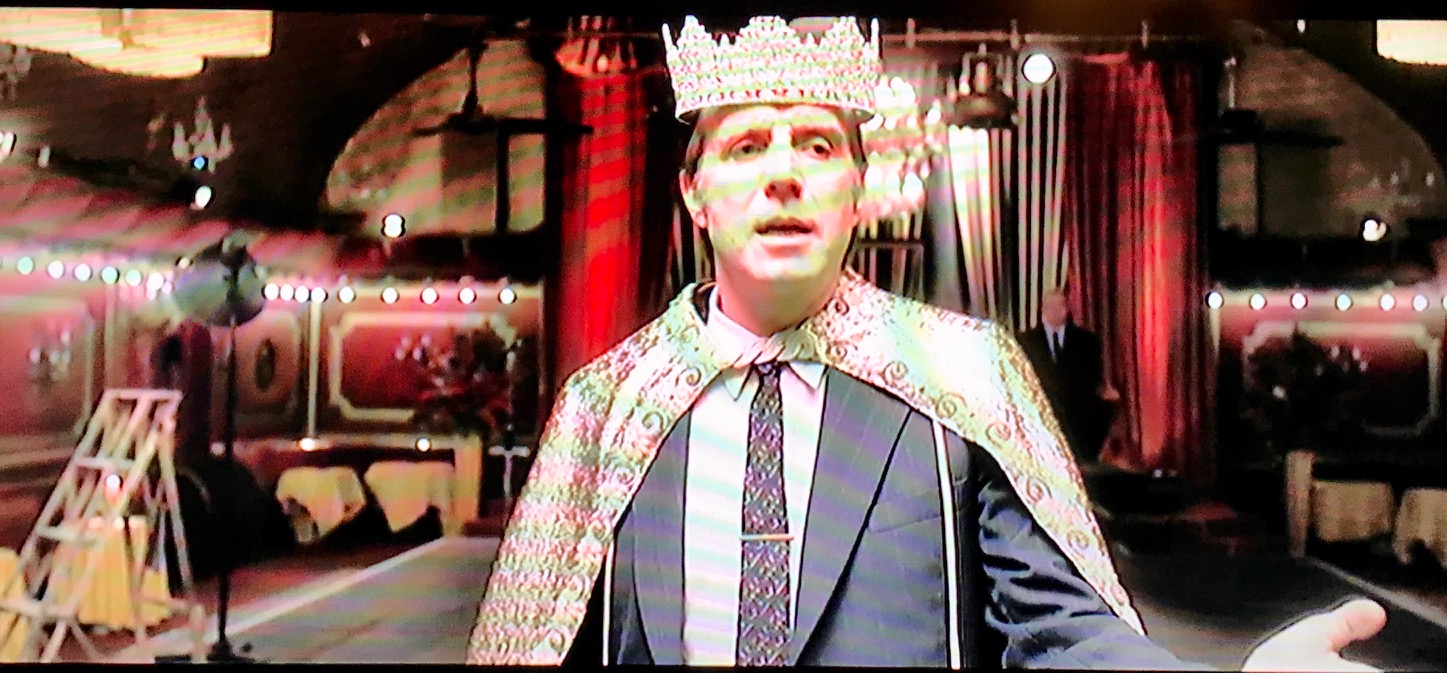
Both documentary and movie frame the event in a similar way, suggesting that despite being in different camps on the night both protesters and contestants were being swept up in the social changes of the period with for instance a black woman winning Miss World for the first time. The movie incidentally features many scenes filmed in the Rivoli Ballroom in Crofton Park, where the contestants are shown rehearsing for the big night.

Rhys Ifans as Eric Morley, filmed in Rivoli Ballroon in Misbehaviour (2020)
Clara Rosager as Marjorie Johansson (Miss Sweden) stomps out of the Rivoli
Both documentary and film credit the idea of demonstrating against Miss World to the Peckham Rye Women's Liberation Group, and in a number of articles promoting the movie Jan Williams and Hazel Twort from the Peckham group are named as the inspiration (e.g. Daily Mirror, 6 March 2020).

The Peckham Rye group seemed to have been formed in 1969. In London Women's Liberation Workshop newsletter Issue 4 (August 1969) 'Janet Williams from the Peckham Rye group wrote an article about the formation of the group. Her account illustrates a growing feminist awareness many groups probably followed. The Peckham group grew out of a one o'clock club. At the first three meetings, some of their husbands attended and they largely discussed problems with childcare. At the fourth meeting Juliet Mitchell came to speak about women's oppression. After this the group decided to exclude men and change the focus of their discussions from child care to more general theorising about women's oppression' (this summary of the article comes from Kelly Coate, reference at bottom of this piece - I would be interesting in reading the whole article if anyone has it).

Several of the members decided to disrupt a public meeting at Goldsmiths College: 'It had been advertised as an open debate on revolutionary ideas, with the participation of left-wing underground personalities . . we stood up and demanded the meeting should hear us on, and then discuss, the oppression of women. We were booed loudly and asked to strip, told we needed a good fuck, etc. However, we went on to hold the 300 people in the hall to our subject for over an hour'. (Janet Williams, London Women's Liberation Workshop Newlsettter, no.4 , August 1969).  I believe this was the free festival at Goldsmiths organised by Malcolm McLaren and others in July 1969, discussed here previously, which featured R D Laing, Alexander Trocchi and other 'underground personalities;.

The Peckham Rye group were one of four London groups who rotated the editing/production of the women's liberation magazine Shrew, set up in 1969 (see Bazin, reference below).  The following year they were also involved with the first national women's liberation movement conference at Ruskin College in March 1970 where a  paper on 'Women and the Family' was written and presented by Ann Bechelli, Hazel Twort and Jan Williams from the Peckham Rye group

The first demonstration against Miss World was actually held outside the event in 1969, the following year they decided to up the ante and infiltrate the audience in order to disrupt more directly. In the aftermath Jan Williams was interviewed in The Observer (22 November 1970) and described as ‘30-year-old South London housewife Mrs Janet Williams’ who declared: ‘The protest had been planned for a number of weeks. As far as we are concerned it was a great success’.

According to Frankie Green at the interesting Women’s Liberation Music Archive 'in March 1972 women who’d met through Women’s Liberation and the Gay Liberation Front women’s group gathered at the council flat of Hazel Twort, a founder of WLM and the Peckham Rye WL group, and began the first feminist band to come out of the movement (to the best of my knowledge): the London Women’s Liberation Rock Band'. Twort played keyboards in the band. I believe she died in 1998.

Jan Williams died in 2010, her obituary in The Guardian is here.

References;

Victoria Bazin (2016) Miss-Represented? Mediating Miss World in Shrew Magazine, Women: A Cultural Review, 27:4, 412-431,

Kelly Coate, The history of women's studies as an academic subject area in higher education in the UK: 1970-1995.

Saturday, March 24, 2018

1970s football and factories - Charlton, Millwall and Palace

Found recently at Deptford market, three football programmes from three South London teams - Crystal Palace, Millwall, and Charlton (guess they must have been from a Chartlon fan, as the Palace and Millwall programmes are from matches against the Addicks). As well as a window on 1970s football adverts in programmes recall an age of mass employment in  London factories


Chartlon v Oxford United 1975 - this was a League Cup match that ended in a 3-3 draw.


Stone Manganese Marine Ltd - 'the world's largest marine propeller builders' based in Charlton advertising for staff in the CAFC programme. The propellor factory later moved to Birkenhead (it closed there in 1998), though the related Stone Foundries is still going.


Millwall v Charlon, September 1977 - a 1-1 draw in Division Two

Millwall sponsors 1977 - mostly small business by the look of it, wonder how many of these are still going. I can see the Duke of Albany, Monson Road in there - New Cross pub now flats. Parke Record Distributors, based in Bromley, went bust in 1981.


Palace v Charlton in Octobe 1977 - 1-1 in Divison Two

'Congratulations on reaching the second division from a first division company'. Philips advertises for staff at its Croydon factory, where it made TVs.  The company moved its electronic HQ from Croydon to Guildford in 2004.

Monday, July 31, 2017

What are you taking pictures of? - Lewisham '77 photo exhibition

As mentioned here before, there's a whole series of events led by Goldsmiths coming up in next couple of weeks to mark the 40th anniversary of the 'Battle of Lewisham'  when, on 13 August 1977, the far-right National Front (NF) attempted to march from New Cross to Lewisham town centre, leading to violent clashes with counter demonstrators and the police.


For the whole of August there will be a photography exhibition 'What are you taking pictures for?' in the Kingsway Corridor  of the Richard Hoggart Building at Goldsmiths (that's the main old building on Lewisham Way):


'For the first time, photographs documenting the events of 13 August 1977 are exhibited alongside ephemera and newly discovered archive material. This exhibition brings together striking images featured in radical photography journal Camerawork and rarely seen photographs taken by some of the most important photographers documenting life in Britain in the late 70s.

Featuring work by Mike Abrahams, Peter Marlow, Chris Schwartz, Syd Shelton, Chris Steele-Perkins, Homer Sykes, and Paul Trevor.

Opening event with drinks reception: 6pm on Thursday, 3 August. All welcome'.


Image below by Chris Schwartz, I think this is New Cross Road taken from Clifton Rise - building on left is New Cross House, the car place (The Motor Way Centre) opposite is on corner of Laurie Grove is now the Word Bookshop. Banners visible include a couple of anarchist ones ('Struggle' and 'Anarchist Black Cross - Oxford Group') and 'Socialist Challenge' (newspaper of the International Marxist Group).


Friday, October 23, 2015

Mek' it Blow: police raid New Cross Jah Shaka Blues Dance (1975)

From the groundbreaking black radical magazine, Race Today (May 1975), a report on 'the atmosphere of tension that has gripped the community of black youth in South London following a police invasion of a blues dance at Malpas Road, New Cross, on Saturday 26th April'. 

'More than 200 young blacks danced to the sound of the popular Jah Shaka at Malpas Road on Saturday/Sunday 26th-27th'. After visiting to demand the sound be turned down, the police 'reinforced in numbers and violent in attitude... ordered everyone to leave the building. One of the organisers who stood at the door was dragged out and thrown into the van. The police proceeded to kick, punch and truncheon people indiscriminately. Not content, they went on to wreck £400 of equipment with their truncheons. Sixteen people were charged with crimes ranging from assault to drunk and disorderly behaviour... one police officer exuding arrogance warned Jah Shaka that the sound was banned from playing in South London'.

'A mass meeting was organised on Monday 28th at the Moonshot Youth Club, New Cross. Some 300 youths attended. They dealt at once with the ban placed on Jah Shaka. They immediately announced details of another party in the area at which Shaka would play'


Thursday, February 26, 2015

New Cross Road c.1970

A remarkable picture of New Cross Road in around 1970 by Tony Sullivan.  Much of it hasn't changed, but note on the right on the corner of St James the building with 'A sign is a fine investment'. That is the Pearce Signs factory (featured here before with some photos of the inside of the factory).  Loring House -Goldsmiths student accommodation- now stands on that site.


Wednesday, December 17, 2014

Brixton Socialist Club at Canterbury Arms (1978)

The Canterbury Arms in Brixton is facing demolition, to be replaced with flats. Its great back room has seen some amazing nights, in particular in recent years the legendary indie pop club How Does it Feel?.

Found in a copy of the Leveller magazine (December 1977?) here's listings for the Brixton Socialist Club at said pub in January/February 1978. Acts performing there included folk singer Leon Rosselson, socialist feminist writer/historian Sheila Rowbotham and 7:84 Band (from the theatre company named from the statistic that 7% of the population owned 84% of the wealth). There was also a benefit for the club at Lambeth Town Hall featuring radical avant-rock band Henry Cow.


Thursday, October 23, 2014

The Specials at Lewisham Odeon

Nice piece in the Guardian today by Jon Dennis on the Specials as 'the music that changed my life': 'The Specials' Gangsters symbolised the fight against the fascists at my front door'. The author grew up in Lewisham, and recals:

'London was drab and frightening in the late 70s, nowhere more so than Lewisham, where I lived. In 1977, Lewisham had been the scene of a riot when the National Front attempted to march. There were coaches full of far-right thugs parked outside my house. My adopted sisters are black, and so for my family the NF represented an existential threat. Racism was rife among my predominantly white classmates. The Lewisham march represented a political awakening for me. I was glad of any ally, and the Specials defined themselves against the far right...

In December 1979 I attended my first gig: the Specials at Lewisham Odeon. The support acts were the Selecter and Dexys Midnight Runners. The audience were frenzied, dancing continually, with frequent scuffles breaking out. For years afterwards I assumed that violence was a normal part of going to gigs. The experience was frightening, but also exciting. It illuminated a world that was violent and hard, shone a light on the grimness of late-70s London, but also provided gleeful escape...'

That gig at Lewisham Odeon was on 1 December 1979 - quite a line up! The Selecter also played there in March 1980 (there's a recording of that gig out there somewhere)


Monday, October 20, 2014

'Blacks Brittanica' in New Cross

This Thursday 30th October, 7pm in the Cinema (room RHB 185) at Goldsmiths, University of London, SE14 6NW:

'South London Anti-Fascists are proud to host a screening of David Koff's 1978 documentary 'Blacks Britannica'.

Blacks Britannica shows the realities of race and class in 1970s Britain with rare honesty and is a powerful base for thinking about racism and the state today. The film charts the history of black people and black struggle in Britain from colonialism and migration to the Notting Hill Carnival and the Spaghetti House siege. The film has been described as "a harsh, relentless and passionate indictment of the British ruling class for manipulating and exploiting British blacks in the interest of profit". Originally produced for US public television, the film was re-edited and censored by TV station management who then tried to sue the director to prevent him distributing his version of the film (we are showing the original cut).

There will be a chance to discuss the film after the screening with Colin Prescod, one of the writers and activists who features in the film. Colin himself made the acclaimed series 'Struggles for Black Community'. The evening is free and all are welcome. If you have any specific requirements please message us on facebook or email hello@slaf.org.uk.Director David Koff passed away earlier this year and we would like to extend our thoughts to his friends and family'.


Blacks Britannica in 'seedy' New Cross, 1980

Blacks Britannica was seemingly shown locally not long after it was released. A dubious article in the right wing Spectator magazine, 'The Black Spokesman Industry' by Roy Kerridge (2 August 1980), mentions a poster for the film in 'seedy' New Cross where the writer was checking out what the local 'negro youth' were up to:

'Buying a return Tube ticket to New Cross Gate with reckless abandon, I set out to see for myself if negro youth were being 'got at'. New Cross, in south-east London, is a rather seedy area, varying from outright shabby to shabby-genteel, with some pleasant tree-lined streets off Lewisham Way. It is full of West Indian immigrants and their English children. The first thing I saw as I stepped into the street was a poster which read 'Revolution Youth! Free film - Blacks Britannica. Presented by the National Union of School Students. Speaker: local black activist, Fitzroy Maclean.'

A few steps down the road took me to a shop called 'Babaji', which was closed. However the entire window was filled with apparatus used in marijuana-smoking: pipes, scales for weighing the stuff when selling it, and a product lalled 'Maggie -  the only way to clean your grass'. There were also several books on growing  the weed and on Rastafarianism.'Legalise Cannabis' posters and a sign reading 'Member of the Chamber of Commerce and Trade, Borough of Lewisham'. I do not suppose that the shopkeeper was a negro. Nevertheless, his customers must have been local youths.The effects of long-term weed-smoking seem to me to be spiritual rather than physical, resulting in change of character. Dark thoughts, arrogance and cynicism soon go hand in hand with stupidity and forgetfulness... [I] wandered back to New Cross and a pub called The Star and Garter. No longer was I in search of self-conscious 'blackness', and despite all the propaganda, the coloured youths I passed did not seem unduly revolutionary'.

(can't believe that in 1980 some thought it was still OK to refer to 'negroes' and 'coloureds', but there you have it)

Friday, March 21, 2014

Chris Schwarz: Every Picture Tells a Story

Chris Schwarz (1948-2007) was a remarkable photographer who documented everyday life in SE London and historical events (such as the 1977 'Battle of Lewisham'). Later in life his photos of the remains of Jewish presence in Poland- ruined synagogues etc - prompted him to sell his flat to finance setting up the Galicia Jewish Museum in Krakow. This weekend sees the first in a series of events and exhibitions built around his work:

'An exhibition of photographs by acclaimed photographer Chris Schwarz opens at three Lewisham venues - The Albany, Lewisham Library and Lewisham College– in March 2014. The images record Lewisham and Deptford in the 1970s and 1980s and the work of The Combination Theatre Company and were taken by Chris when he was photographer in residence at The Albany. They provide a fascinating legacy of the changing faces of Deptford over a 15 year period.

The photographs form an invaluable record of life in North Lewisham in the 1970s and 1980s and show children, young people and their families participating in cultural and creative activities. Highlights include images of totters, Millwall Football Club fans, adults at work and performances by the Albany’s resident theatre company The Combination. They include images of the old Albany that was located at the junction of Creek Road and Deptford Church Street, the New Albany in Douglas Way and its opening by the late Princess Diana in 1980.

Chris Schwarz was a professional photographer who worked for the Guardian, Time Out and many other publications. His work was exhibited at the Photographers Gallery in London and overseas, and his work was published in several books. He also founded the Galicia Jewish Museum in Krakow, Poland. Chris died in 2007 and bequeathed his vast collection of over 8,000 photographs to The Art of Regeneration, a creative regeneration project that was at one time based at the Albany.

There will be special storytelling performances at each venue by members of The Deptford Stories Theatre Company, who will interpret selected photographs. Their performances will be based on oral history interviews that have been conducted between 2011 and the present. The performances take place on:

The Albany, Douglas Way, Deptford, SE8 4AG
Performances: Saturday 22 March at 12.45 and 13.45 (performances last approximately 30 mins)
Exhibition: Saturday 22 March until 31 March

Lewisham Library, 199 – 201 Lewisham High Street, SE13 6LG
Performances: Tuesday 25 March at 19.00 (performances last approximately 30 mins)
Exhibition: Monday 24 March until Friday 28 March

LeSoCo Lewisham and Southwark College , Breakspears Building, Breakspears Road, SE4 1UT
Performance and exhibition: Thursday 27 March at 19.00

The exhibition and performances are free of charge.

After the exhibition the photographs, along with the rest of the vast collection of Chris Schwarz Deptford and Lewisham work will be stored by the London Metropolitan Archives and will be available to the public to download.

Ballard House, Thames Street, Greenwich
The Deptford Stories Theatre Company was founded by director, John Turner and Jenny Harris. Jenny was the creative producer and after a lifetime of creative production in theatre, education and community arts development including the Combination at the Albany, The Education department at the National Theatre and the Art of Regeneration, Every Picture Tells a Story was Jenny’s last production for the Art of Regeneration and the Deptford Stories Company. Jenny herself died before she could see Every Picture Tells A Story or hear the stories the Deptford Stories Company will tell; this is a chance for the public to witness her final production.

The Every Picture Tells a Story project has been supported by the Heritage Lottery Fund and includes the exhibition, performances and digitisation of the photographs as a permanent public record'.

Chris Schwarz obituary in the Guardian

Reflections on Chris Schwarz

Facebook event details


Wednesday, March 12, 2014

Undercurrents - 1970s radical snippets

Undercurrents, 'the magazine of alternative science and technology', was published in England between 1972 and 1984. Christopher Squire was one of the editors and he has performed a great service to historians of radical movements by creating an online archive of the journal. I have had a preliminary look through for SE London content but I am sure if you have the time you could find lots more of interest there.

As explained in an article, 'How it All Got Started', early issues of the magazine were printed at the house of Ann Ward: 'Ann was a Labour councillor in Southwark who, with the aid of some money she’d inherited, had installed in the basement of her house a litho printing press, complete with plate­making and typesetting facilities, which she made available virtually free to non-profit groups. So the first Undercurrents (subtitled "the magazine of alternative science and technology”) was produced for little more than the cost of paper, with the aid of Ann Ward and of one Pat Coyne who came along to print the local community newspaper and was cajoled into helping us print Under­currents. He stayed'.

So here's a few local bits and pieces...

Albany Fire

In July 1978 there was a fire at the Albany Theatre in Deptford, then based in Creek Road. As Undercurrents reported, it 'was the focus of local opposition to the National Front and a regular venue for Rock Against Racism', and it was generally supposed that the fire was caused by a fascist arson attack.


Undercurrents, Oct-Nov 1978
Lewisham World Shop

This shop opened at 1 Sydenham Road SE26 in 1978, 'concentrating on world development issues' and selling 'wholefoods such as brown rice, peanuts, kidney beans' etc. It seems to have been a trailblazer in promoting 'fair trade'-  people involved with it also set up the 'Campaign Co-op' to import coffee direct from farmers co-operatives in East Africa (the address of the Co-op, in 1978, was 72 Rosendale Road, SE21).

Undercurrents, April-May 1978
Free-wheel Cycle Club

In 1977 the Free-Wheel Cycle Club was heading off to Shoreham (presumably typo in magazine) on a bike ride from Clifton Rise in New Cross. 'All anarchists/socialists' were welcome.

Undercurrent, December 1977-January 1978

Thursday, February 27, 2014

White Panthers in SE2 - Abbey Wood and the 1970s counter culture

The White Panther Party was a radical and anti-racist organisation originally established in the Detroit area in 1968 with the aim of bringing together white radicals to act alongside the Black Panther Party. It had its roots in the counter-culture, with one of its founders being John Sinclair - manager of the proto-punk band the MC5. Its ten point programme declared:

  1. Full endorsement and support of the Black Panther Party's 10-point program and platform.
  2. Total assault on the culture by any means necessary, including rock and roll, dope, and f***ing in the streets.
  3. Free exchange of energy and materials—we demand the end of money!
  4. Free food, clothes, housing, dope, music, bodies, medical care—everything free for every body!
  5. Free access to information media—free the technology from the greed creeps!
  6. Free time & space for all humans—dissolve all unnatural boundaries!
  7. Free all schools and all structures from corporate rule—turn the buildings over to the people at once!
  8. Free all prisoners everywhere—they are our comrades!
  9. Free all soldiers at once—no more conscripted armies!
  10. Free the people from their phony "leaders"—everyone must be a leader—freedom means free every one! All Power to the People!'

Inspired by this example, Mick Farren and others established The White Panther Party UK. Some of its exploits were featured in the International Times, now available in a great online archive. Interestingly, its 'Central Co-ordination Chapter' was based in Abbey Wood, with the address given as 1 Conference Road, SE2. As well as the Abbey Wood chapter (which later became the Greenwich chapter), there were South London groups in Croydon and Bromley.

International Times, 1972

In March 1972, they staged a protest in Woolwich, as reported in IT (24 March 1972): 'On Saturday 11 March approximately 40 members of the White Panther Party- from Abbey Wood, Ilford, West London and Croydon and Bromley Chapters - took to the streets of Woolwich in SE London. The reason was to protest about the distortion and lies that appear in a local paper, the Kentish Independent. Incidents of the day were the surrounding of a police car by angry Panthers, forcing the pig to freak and drive away at high speed, and a visit to the local police station by brothers and sisters where all were ejected by the pigs within five minutes. During the rest of the afternoon the Panthers were followed by plain-clothes pigs. Copies of a handbill distributed on the day—"This paper is an enemy of
the people"—are-available from Abbey Wood Chapter, White Panther Party'


The Abbey Wood group was involved in squatting and ran a food programme, activities that seem to have led plenty of conflict with the police. IT reported on 6 April 1972:

'One of the main functions of the Party is to awaken the people and to teach them strategic methods of resisting the power structure, this has caused Party members/Chapters to come into conflict with the pigs, the principle confrontations being in Glasgow and Abbey Wood (South East London). In Glasgow the Panthers have been hassled by the pigs continuously, mainly due to the effectiveness of their legal-aid programme, which brought legal-aid to the kids on the streets. (Glasgow CID have the Party's 10-Point Programme on their office wall). In Abbey Wood most of the confrontation occurred during a series of squats last year, where on a number of occasions brothers and sisters were violently assaulted and threatened by the pigs. The Party has also done a good deal of community work—trying to provide viable alternatives to the present pig system. Chapters have their own local programmes: in West London, Abbey Wood and (soon) Glasgow, free food programmes operate; Glasgow Panthers have many of the street gangs as members and they recently got a rent strike together in Easterhouse; most Chapters have as part of their local programmes, drug education- pro life drugs like marijuana, hashish, peyote, pure LSD and mescalin, and anti death drugs like phony THC, downers, speed and smack that threaten our nation like a plague'.

A report by John Carding in International Times, issue 142, 17 November 1972, gave further details: 'The White Panther Party is committed individually and organisationally to the struggle of ALL people for liberation and self-determination, by any means necessary, and is prepared to accept whatever consequences that commitment brings… The main thing to be said is that essentially the Party is composed of freaks off the street like anybody else in the community, without any experience of political work except that gained from plunging ahead the best way possible...

Greenwich Branch (ex-Abbey Wood). Weekly free food programme is still operating after two years. Members are involved in local community TV station, Cablevision, and in the formation of a 24 hour Advice Centre in the near future. Croydon and Bromley Branch: Involved mainly with squatting activity at the moment, which has brought them into conflict with the local pigs. All of the London Branches have been participating in the formation of a self-defence programme'.

I have come across one issue of 'Chapter?', a magazine produced by the Abbey Wood White Panthers, seemingly in 1971. It's a remarkable 60 page zine with articles on a wide range of movements including the Gay Liberation Front, People not Psychiatry, the Black Unity and Freedom Party, the Schools Action Union and more. 


In terms of local activities they were clearly very busy. An article on the free food programmes describes twice weekly deliveries to 60 old people on Abbey Wood and Thamesmead estates, as well as a Christmas visit to Bexley Psychiatric Hospital. The article was written by Stephen Lemanowicz, grandly titled 'Minister of Welfare, Abbey Wood Chapter'.


Other Abbey Wood committee members included John Carding (Co-ordinator), Bob Brown, Ray Carne and Tom X. At this time there address was 18 Openshaw Road, SE2


They had arts and drama/street theatre groups that met at St Michael's Church Hall in Abbey Wood Road. They were involved in organising a Schools Liberation Front with pupils from Abbey Wood, Roan Boys, Crown Woods, Bloomfield and Picardy Schools, and their squatting activities included briefly occupying an empty building at 55 Raglan Road in Woolwich - reported in local press as 'hippies struggle with police in Plumsted eviction scene'. Several member were also arrested fly posting the footbridge on Bostal Manor Way.


Their social HQ seems to have been the (now demolished) Harrow Inn in Abbey Wood 'where yer local Panthers hang out'. There was a Deja Vu club there with 'live groups every Friday' and 'Head Disco Show' on Sundays.


The Harrow Inn was where the White Panthers put on some benefit gigs, including underground legends Hawkwind and Pink Fairies on 12 February 1971 - packed with 700 people - and Clarke/Hutchinson and Mighty Baby in April 1971


This sympathetic report of one of the gigs at Harrow Inn (seemingly from local paper, but can't find details) mentions that Clark/Hutchison were also supported by The Blackheath Foot and Death Men, 'a crowd of Hells Angels and Hippies from the Blackheath area' who enjoyed morris dancing and drinking. They still exist today as the Blackheath Morris Men.


Image below comes from article about White Panthers in International Times no.127, 6 April 1972 - it seems to have been taken on Plumstead High Street, corner of Riverdale Road - compare with picture below of scene today, police station has been rebuilt but houses opposite largely unchanged. John Carding, who wrote this article in IT, is the guy with round glasses.


Further update, 8 October 2021:

Courtesy of Richard Alexander on facebook we now have some images from issue number two of Chapter! (now with exclamation mark rather than question mark), seemingly from early 1972. The fine front cover photo shows members of the group with the Viet Cong flag flying outside their squat. Inside there is a detailed account of their squatting which states that they had a White Panther commune at 1 Conduit Street, Woolwich/Plumstead SE18 'with about 15 sister and brothers'. Running out of space they opened a second commune house at Griffen Road, Plumstead before moving on to Ennis Road and then a squattted 'mansion' in Burrage Road, and on to Plum Lane with various eviction dramas along the way. A quick google maps search shows that the cover photo was taken at Conduit Road SE18, the house still standing.

Left to right: Sean O'Brien, Keith Bailey, Ray Carne, Rob Wilton and John Carding


Conduit Road today

From Chapter no. 2 (1972) - thanks to various bands for playing benefits for White Panthers, in addition to those mentioned above this includes Steve Peregrine Took (founder member of T.Rex with Marc Bolan), Brinsley Schwarz (who played at the Harrow Inn) and the White Panther Street Band.

Would love to hear any memories/stories about this scene...

(interestingly Pink Floyd played a free concert in Abbey Wood park in 1967)

New January 2025 - in this episode of 'Drifting through the streets' we revisit Abbey Wood and talk to Sean who lived in the White Panther commune in Conduit Street and has some great memories of early 70s radical outlaw life: