Tuesday, March 27, 2012

Skate Park Opening

Telegraph Hill Park in New Cross was packed on Sunday for the official opening of the new skate park. The facility is already being really well used by kids of all ages (and I don't just mean the under-18s) and is proving that there is a real demand for spaces like this - build it and they shall come.


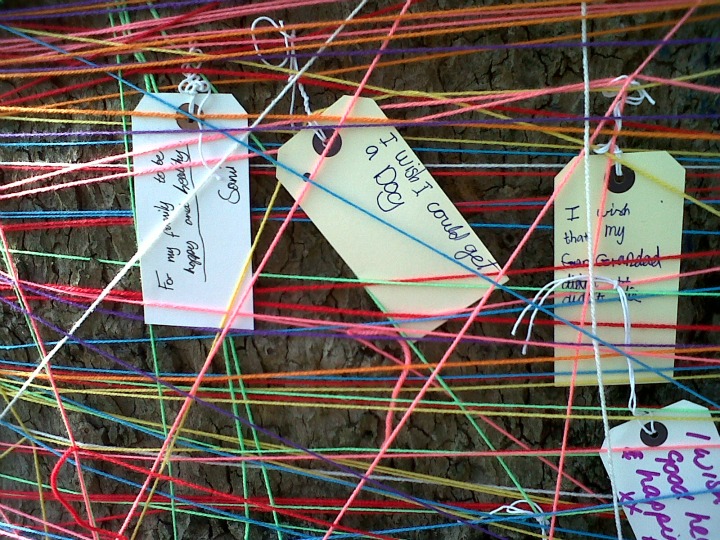
Elsewhere in the park there was lots of activities for younger children linked to the Telegraph Hill Festival, including wrapping a tree with wool and wishes. The organisers, Cristiana Bottigella and Manali Jagtap Nyheim, described it as the Wishing Thread and said that it was partially based on a Hindu custom with Banyan trees.


Ark in the Park encouraged people to make animals out of wood, card and other found materials.


There was a cycle powered sound system by the skate park and, down by the big slide,
a wandering jazz band.


The Telegraph Hill Skate Park logo - with heart made from skateboard.


Monday, March 26, 2012

Music Monday: Eternal

A retro turn in this week's Music Monday, as we recall SE London's greatest ever girl group (at least in the soul category - we can talk about Shampoo another time).

Eternal was conceived of by manager Denis Ingoldsby in 1992 as a UK version of En Vogue. He put together sisters Easther and Verna Bennett, with Kelle Bryan and Louise Nurding (the latter of whom Ingoldsby had met in London club The Milk Bar).


Three of the four were from South London - the  Bennett sisters were from Croydon, and were steeped in gospel music via their family's church. Nurding was born in Lewisham Hospital and grew up in Eltham - she went to St.Thomas More RC Primary School in Appleton Road. In fact her grandad had a stall on Lewisham market where she sometimes helped out.

The original line up of the band only lasted until 1995 when Nurding left the band to go solo (she later became known of course as Louise Redknapp); Bryan left in 1998 after a split with the Bennett sisters.

Just a Step from Heaven is one of their better earlier tracks, nice slice of soulful pop plus the slightly surreal sight of the band cavorting to Black Panther Party/Public Enemy imagery (dancers in berets and combats, clenched fists etc):

s


"I Wanna Be the Only One", a duet with BeBe Winans, was a UK number one in 1997 and a bona fide 1990s soul classic:

Friday, March 23, 2012

Convoys Wharf Consultation

In Deptford tomorrow (Saturday 24th March) there's a consultation event on the future of the key Convoys Wharf riverside site. Cynical as I am about developer-initiated events, the fact that it is happening at all does demonstrate that the current 'Masterplan' is in question. Many people locally argue that it proposes a bland, identikit luxury tower block development that ignores the history and location of the site. Alternative proposals will be being put forward tomorrow by Deptford Is and others. There will also be an opportunity to look around the site and the archaelogical dig currently in progress there.


Timetable tomorrow:
11.00 Exhibition opens

11.15 – 12.15 Site and archaeological tour opportunity 1

12.15 –14.15:  Welcome from Hutchison Whampoa, followed by speeches and presentations, including Joan Ruddock MP, Sir Terry Farrell and colleagues, and local community groups.

The presentations will be followed by question and answer opportunities and refreshments will be provided during the two-hour period.

PLEASE NOTE: If you want to take a full part in these sessions, please arrive promptly at noon. Register for one of the site tours on arrival.

14.15-15.15: Site and archaeological tour opportunity 2

16.00 Exhibition closes


Yet more tales from The Crypt

The late 1980s Psychedelic Nites in the Crypt at St Paul's Deptford have been mentioned here before. Here's a few more images from that time and place that I have rounded up:


Here & Now in December 1988 -
incidentally they are playing at The Ivy House SE15 on 4 May 2012

Pink Faries, March 1988 - Larry Wallis from The Pink Fairies
lived for years on the Walworth Road, above the Halifax bank I think
(maybe still does)
The Troggs - presumably of Wild Thing fame

Ozric Tentacles and The Glitterband (what? Gary Glitter's old backing band?)

The Taste Experience - a separate psychedelic club

Magic Mushroom Band in The Crypt

A non-pyschedelic night - Virus on stage at Mortarhate records night
in 1986 (Conflict's record label)

Wednesday, March 21, 2012

Jungle Brothers in Peckham


Now I have bought my tickets I can safely publicise this without worrying whether it's going to sell out. So let's just say The Jungle Brothers are playing in Peckham!

'Fri April 13th - An Exhibition of Sound continues with Chapter 3 / Hip Hop - Featuring the Mighty JUNGLE BROTHERS LIVE + a special DJ set from the one and only DJ SAMMY B. The JBS one of the most famous and celebrated Hip Hop groups of all time returning with a career-spanning set dropped loud, hard and fast at The Bussey Building / CLF Art Cafe.

The JUNGLE BROTHERS have been around since Hip Hop's Golden Age... They first appeared on the NYC Hip Hop scene with the release of the groundbreaking “Straight Out The Jungle” in 1988.  This recording was the birthplace of the NATIVE TONGUES POSSE a triumvirate of innovative Rap groups (including De La Soul, A Tribe Called Quest, Queen Latifah, Monie Love and later Mos Def) and was instrumental in influencing later envelope pushing artists like the Roots, Arrested Development, Pharcyde, Madlip, Common, Kanye West and others.

Following up their raw, energetic debut, the group went into the studio with NYC underground club and house producer Todd Terry, and Hip house was born. "I'll House You" became a bona fide international hit, making Terry one of the most in-demand remixers to this day...  the Jungle Brothers subsequently signed to Warner Bros. Free to sample and manipulate in a more sophisticated setting, the JBs mixed up breaks and beats that recalled the Bronx block parties of their youth, incorporating elements from jazz, soul, and funk classics.The resulting album: “Done By The Forces Of Nature”, ranks with other masterpieces of the era like the Beastie Boys “Paul's Boutique” and De La Soul's seminal “Three Feet High And Rising”'.
'
Advance tickets available here (buy before 5 pm Friday if you can, as prices then go up)


The Budget: Brockley Speaks


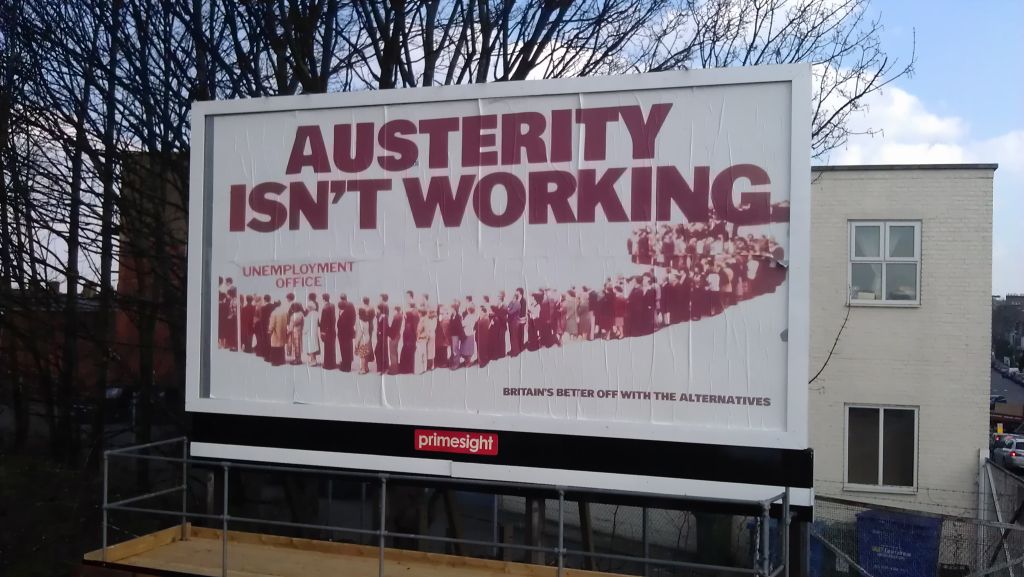
'Austerity isn't working' poster in Endwell Road by Brockley station, a play on the infamous Tory/Saatchi 1979 'Labour isn't working' poster (thanks to Luke Collins for the photo). The slogan was the basis of UK Uncut's budget protest today, as reported by Andy Worthington.

Here's a short film of it being put up a few days ago:

History Corner: Nunhead Station Shooting 1924

On March 18 1924 there was a tragic incident at Nunhead railway station. John Alfred West, a 24 year old lorry driver from Marylebone, shot his ex-fiancee Edith Agnes Barker (23) as she was getting off the train. She recovered, but he died of his injuries at Kings College Hospital the next day.

Barker, of Gibbon Road, was a programme seller at the Scala Theatre. Her father, Thomas Cornish Harker,  ran a newsagent near to the station. He told The Times that the couple had been engaged for four and a half years, but had broken up six weeks before; 'Since then West has been bothering her with his attentions. Last night she came home as usual by herself, by the 11.50 train from St Pauls Station. At the Elephant and Castle Station, West, who appears to have been waiting for her, got into the compartment where she was. On arriving at Nunhead, just as she was getting out of the train, she tells me, West pointed a revolver at her and fired. He fired two shots at her and then one at himself. Edith fell forward on to the platform bleeding from a bullet wound in the face' (Times 19 March 1924)

At the inquest into West's death, station attendant Charles Abbs recalled 'Miss Harker jumped from the train, dropped her attache case on the platform, and collapsed in my arms, saying "He has shot me". The next thing I saw was the man standing in his carriage, and before anything could be done there was another report of a revolver. The man gave a half-right turn and fell on the back of his head on the platform with his legs remaining inside the carriage' (Times, 26 March 1924).

Tuesday, March 20, 2012

Fred Vermorel on Kate Moss

Amongst some would-be radicals there is a deep loathing of popular culture that can come across as very patronising. You know the sort of thing - 'TV is for fools and the masses' interest in celebrities just shows that they are dupes of the system' etc. etc. Sometimes this critique is dressed up in language about 'the spectacle', with a suggestion that music, TV and film simply create passive consumers unable to think or act for themselves. The notion of the Society of the Spectacle derives from Guy Debord and the Situationist International in the 1960s, though it has to be said that their notion of it is more sophisticated than the cod-situ version sometimes spouted today - certainly little trace of any moralistic condemnation of 'consumerism'.

One man who knows more about the situationists than most is Fred Vermorel. He was actually in Paris during the events of May 1968, in which the situationists were actively involved, and indeed shortly after played a critical if inadvertent role in cultural history when he introduced his friend Malcolm McLaren to the work of the Situationist International at the '36 bus stop, just outside Goldsmiths College in Lewisham Way'.  Vermorel was living in Jerningham Road, New Cross at this time (more about this here). McLaren of course went on to manage the Sex Pistols, some would say applying some ideas he culled from the situationists -  a connection made by Fred and Judy Vermorel in their 1978 book Sex Pistols: the inside story'.

Vermorel's take on 'fandom' is quite distinctive. In Starlust: the Secret Life of Fans  (1985), Fred and Judy Vermorel collected together the fantasies of music fans with a suggestion that they reflected a kind of 'utopian romanticism' - a desire for a more intense way of life that sometimes exceeded the limits set for it by the cultural industry, in its own way potentially subversive.

Since then Vermorel has written a  number of books which could be described as celebrity biogs, with subjects including Kate Bush, Vivienne Westwood, and Kate Moss. To an extent Vermorel inhabits the mindset of the obsessive fan in his books, trawling tabloids and acquaintances for tales of sex, drugs and scandals, as well as the micro-detail of  celebrity trivia. But these are also biogs with a difference - for instance the Kate Bush book includes genealogical research on her forebears in Kent, and the Westwood one includes fictional first person narrative.


'Kate Moss: Addicted to Love' (2006) starts with reflections on her 'Croydon' origins, or rather as Vermorel points out the leafier suburbs of the Croydon area: 'Forget Croydon. That is a fantasy she likes to spread as much as the media  does. A supermodel from Croydon: beauty flowering out of the concrete towered, motorway infested, chav ridden wastelands... Sanderstead... is where Kate Moss really comes from - spiritually as well as spatially. "Croydon" may be the general area, and convenient shorthand, but Sanderstead - suburbia, is what's inside her'.

Vermorel then goes on to detail Kate's South London life  - birth in St Mary's Hospital, Croydon; a short period at Pagehurst Road, Addiscombe then growing up at 75 Church Way, Sanderstead; Ridgeway Primary School; Riddlesdown High School; hanging out with the teenage drinkers and smokers in Purley Town Centre; moving in with her mum in Forestdale when her parents split up; meeting early boyfriends in Croydon wine bar Rue St George - then after being spotted at an airport on to The Face,  Johnny Depp (who told Vanity Fair in 1997 'man, you can't beat that South London accent'), Pete Doherty, 'Cocaine Kate' and all the rest.

This is definitely in the mainstream 'unauthorised' celebrity biography genre, rather than some kind of cultural studies text, but Vermorel does slip in the odd Burroughs and Baudrillard quote and some wider reflections on the relationships between celebrity, money and drugs:

'There are parallels in how celebrity works, and how money works. Both celebrity and money are formless and yet endlessly mutable... They both originate in magic belief, and their extraordinary  power to reproduce and migrate across culture comes from their 'super-objective' quality: they are beyond everything yet inside everything. The stock exchange and the hit parades both float on fetishes of reputation - and of number... the essence of any celebrity is not anything instrinsic to the person who bears the Name - the magic is in the numbers - of hits, of clicks, of number ones and top tens, the milliosn of fans or  $s or £s that accrue to that 'personality''.

And:

'Heroin stands for money - trade - turnover - feverish spending - sales bonanzas - overnight fortunes - role reversals - and amazing good luck. It equally signifies fashion, which is the pulse of pure consumerism. Heroin, as the ideal commodity, creates perfect consumers... No surprize then, the trade off between those ultimate icons of conusmerism, models, and those ultimate consumers, junkies. Both work from wasted bodies and freak energies, they live on the margins of the tragic and the phantasmagorical - between the next frock and the next fix'.
Kate Moss's first front page, The Face, 1990
(from Corinne Day's famous Camber Sands photo shoot)

Fred Vermorel now teaches at Kingston University and at Richmond.

Monday, March 19, 2012

Music Monday: Controlled Weirdness

Neil Keating aka DJ Controlled Weirdness has been DJing since the 1980s, playing out all kinds of bass and beats in London, New York, Berlin and many other places (I first came across him at Dead by Dawn in Brixton in the mid-1990s). While best known for hard breaks and electro-tinged sounds, he is also a formidable authority on disco (especially it's crossover into early rap)  as I can vouch having once spent time crate digging with him in Friedrichshain - check out some of his mixes at Ill FM.

Controlled Weirdness recently at the Bussey building in Peckham

From his Rotherhithe tower block HQ he has also released numerous tracks under various guises on his own Unearthly Records and other labels. He has recently started uploading much of his back catalogue on to Soundcloud (he has made some of the tracks featured here temporarily available for download so get busy). 

The Deptford Market Arcade Classics EP (2003) was 'Inspired by rooting through the debris and detritus of South London. The sound at the start of Docklands Battle Breaks is the Thames river rushing through one of the old dock gates in Deptford'.


'South London Bass' (2005) is a classic; the title is self-explanatory.


His latest upload is the previously unreleased 'I'm the Guvnor'.


'Let's all have a South London Acid House Party'  - great late 1980s sample at the beginning: 'Saturday night in South London, hundreds of young people are gathering for the latest craze - an acid house party in a disused warehouse'


Neil has written an excellent article in Datacide magazine about clubbing and warehouse parties in 1980s London, You’re too Young to Remember the Eighties – Dancing in a different time:

'The Saturday night ritual was to head to the Spice of Life pub on the Charing Cross Road. This is where all the various clubbers would congregate before heading out to different parties. Here you would hear about these illegal warehouse parties that had started taking place in the run down old docklands areas near the Thames and around London, Blackfriars and Southwark Bridges. This area was pre regeneration and was full of empty old warehouses with nobody living near by. You would get the address and head down after midnight and try and find the party. It would be Five pounds to get in and you could buy Red Stripe beer for a pound which was sold out of dustbins crammed full of ice. Some of these parties were massive and you would get a real cross section of people crammed into a dirty warehouse and dancing all night. The music was usually rare groove which was basically obscure funk 7 inches that DJ’s had started digging up. There was no door policy like at the some of the trendier night clubs so you’d get people dressed up in designer clothes next to punters in jeans and T-shirts dancing all night'.

As mentioned here before, Tooley Street by London Bridge was the location for some of these warehouse parties.

Controlled Weirdness is playing at the Festa Junina Brazilian festival in Berlin in June, and has some other nights lined up a bit nearer home. Follow him on Facebook or Twitter for details.

Saturday, March 17, 2012

Bus Explodes in New Cross

The top of Telegraph Hill was shaken by a loud bang at around 8:15 this morning as a 343 double decker bus caught fire and exploded on Pepys Road. A car parked next to it was also destroyed by fire. The incident happened at the bus stop next to St Catherine's Church, by Haberdasher Aske's school (top site).


Fire engines, police and ambulances were on site, but it seems that nobody was injured. Speculation at the scene was that an electrical fault was to blame, but the fire investigation team is now on site to explore the cause.

(Picture below from Benjamin Ward on Twitter - some more photos and video at Brockley Central and at Demotix)

Thursday, March 15, 2012

Savage Messiah in Peckham


If you are gainfully unemployed or can skip off work early tomorrow, there's a chance to see Ken Russell's film Savage Messiah in Peckham - his 1972 biopic about French sculptor Henri Gaudier-Brzeska. It's on Friday 16th March 2012, 3 pm, at the Montpelier, 43 Choumert Rod, SE15. Presented by Days are Numbers

History & Literary Events in Telegraph Hill Festival

Lots of events going on in the Telegraph Hill Festival in New Cross over the next week or two. Tamsin has helpfully summarised some of the history, natural history and literary events at South East Central, here's a few of them:

Thursday 15th - 6pm - The White House, Kender Street, SE14 5JQ (free):  A talk by Chris McCaw of Rivers and People on "The Wildlife of Lewisham's Waterways". Part of the regular series of talks given in the White House (usually on the second Thursday of the month - made a week later this time to co-incide with the Festival) by the New Cross Sub-Group of the Lewisham Local History Society.

Thursday 15th - 7.30pm - The New Cross Library, SE14 6AS (free + cash bar): A screening of the film "The Power of Community" about how Cuba suvived "peak oil".

Sunday 18th - 2pm - meeting by the Tennis Courts in the Upper Park (free): History and Architectural Walk around Telegraph  - going east and through Goldsmiths - and along the New Cross Road.

Tuesday 20th - 1pm - the Barnes Wallis Centre, SE14 5LL (free + refreshments):  A screening of the first episode of the 1990s TV documentary "Windrush: the Arrival" and the film John Krish was sacked for making - "The Elephant Will Never Forget" about the last week of London trams and the very last tram coming into the New Cross Depot.

Thursday 22nd - 6pm - The White House, Kender Street, SE14 5JQ (free + refreshments):  "The Elephant Will Never Forget" and "Terminus" - the 1961 John Schlesinger film about a day in the life of Waterloo Station. Both films being shown by arrangement with the BFI - www.bfi.org

Friday 23rd - 10am - meeting by the Tennis Courts in Telegraph Hill Upper Park (free): Chris McGaw back again with "A Wildlife Wander on the Hill"

Thursday 29th - 2pm - Sector J Clubroom, Gately House SE4 2JF (free + refreshments): A repeat screening of "The Elephant Will Never Forget" and "Terminus".

Books and Poetry

Thursday 15th - 4.30pm - New Cross Library, SE14 6AS (free):  Poetry writing workshop for young people (but open to all). Part of a regular Thursday afternoon series.

Sunday 18th - 8pm - Cafe Fed (above the Hill Station), SE14 5TY (£3 + cash bar): "Pleasing Poems Chosen by You" - along the lines of "Poetry Please" - poems and verse on the themes of motherhood (it is Mothering Sunday) and cats - with a quick trot through the whole range of English History, read to a select audience by actors and others.

Monday 19th - 6.30pm - The Hill Station, SE14 5TY (free + cash bar): Writing Workshop and readings by the East Dulwich Writers Group, winners of the National Association of Writers' Groups Awards for 2011, the workshop led by Debi Alper.

Tuesday 20th - 8pm - The Hill Station, SE14 5TY (£4 (£2 concs) + cash bar):  "...and the struggle continues" Poetry, prose and songs by the Strawberry Thieves telling of political struggles around the world, past and present.

Tuesday 27th - 8pm - The Hill Station, SE14 5TY (£2 + cash bar): "Books Quiz" with James Walton of Radio 4's "The Write Stuff" - but he says it won't be quite so difficult.

Thursday 29th - 8pm - The Telegraph, Dennetts Road, SE14 5LW (free): The Festival Book Circle Acclaimed author, Aminatta Forna, will discuss her latest novel, "The Memory of Love", an evocative tale of love, loss and betrayal in Sierra Leone.

Wednesday, March 14, 2012

Lewisham Workfare Protest

Earlier this month (3rd March 2012) there was a national day of action against 'workfare' - the various schemes whereby unemployed people are compelled to work without pay or lose their benefits. Up to 50 people took part in a mobile protest in Lewisham town centre targeting shops involved in the government's programme including Primark, Boots, Greggs, BHS and McDonalds, chanting slogans such as "No wages: Outrageous!"

The call-out for the Lewisham action stated: 'The government and some in the media present it as a way of encouraging people back into work by gaining experience. This ignores two things – first, there are not enough jobs available for those who want them; and second, workfare placements themselves are taking jobs away from paid workers. We have no problem with people learning while working – this used to be called apprenticeships. But workfare tells the unemployed that they will lose their benefit if they do not work for their it. In every other context the minimum wage applies, so why not here?'.

Nick Turner, Branch Secretary GMB Goldsmith’s student workers branch said; 'The government work programme forces mandatory work onto job seekers with multi-billion pound profit making companies who can otherwise more than afford to pay their staff. The government have denied that benefit claimants are forced into their work but it has become clear that those refusing to work for free are being told their benefits will be stopped if they do not take part.This is not only completely unfair on the individual but also depresses the job market - why would a company employ a paid member of staff if they can get them from the dole for free and without a fuss? We are calling on Goldsmiths students and Lewisham residents to fight for the revolutionary concept that if when you work, you should get paid for it. As the old slogan has it “a fair days work deserves a fair day's pay"'.


Another day of action is planned for Lewisham Town Centre on the afternoon of 31 March (exactly 22 years since the London poll tax riot, but can't guarantee it will be quite that big or exciting).  In the lead up to it South London Solidarity Federation have called a 'Public meeting in a public space to discuss the growing direct action campaign against workfare' on Saturday 17th March at 2 pm - venue and possible action to be confirmed, but facebook event details here.

See also: report of recent Lewisham protest at East London Lines; report of a Socilalist Party protest outside Lewisham McDonalds on 25 February; report of Right to Work campaign picket outside Tesco Express on Lewisham Way, 22 February.

History Corner: The Shooters Hill Cheetah (1963)

I had a pleasant walk in Oxleas Wood a couple of weeks ago, a lovely peaceful spot - but now comes news that during the Olympic militarisation of London there may be missile launchers based next to the cafe there and/or on Blackheath by the Territorial Army building (as discussed at Blackheath Bugle and elsewhere). But it wouldn't be the first time the military had turned out on Shooters Hill on a phantom hunt.

SE London has a whole folklore of supposed big cat sightings - the Beast of Bexley, the Palace Puma, even the Nunhead Panther - with theories to explain them of varying degress of probability. One of the biggest cat panics occurred in 1963 on Shooters Hill, where a supposed Cheetah was reported in the Oxleas Wood area.


"The most famous labour-intensive hunt was for an animal dubbed by the press 'The Shooters Hill Cheetah'. On the 18th July 1963 David Beck, driving through Shooters Hill in south-east London, saw a large animal lying by the side of the road. Assuming it to be an injured dog he approached it, and then realised it was in fact a large cat with a long, upward curling tail. It ran off into Oxleas Wood. The same night police officers were amazed to see a 'large golden animal' jump over the bonnet of their patrol car. A check with zoos and circuses confirmed that no animals had escaped.

It was a magnificent affair. It covered 850 acres and involved 126 policemen with 21 dogs, thirty soldiers, ambulance men and RSPCA officials. No sign of a big cat was found - except for some spoor. These were huge - some seven inches across, the size usually associated with a lion or tiger; yet they showed claw marks, the characteristic not of a lions, but of a cheetah's paw print. The 'cheetah', however, was never caught and the hunters dispersed'.

Source: Mystery Big Cats by Merrily Harpur (Heart of Albion Press, 2005)

Tuesday, March 13, 2012

Freedom for Tooting

Some friends of mine have recently moved from New Cross to Tooting, so as a parting gift Transpontine will take a rare roam into the western lands of South London to offer up some nuggets of cultural history from Tooting and Balham.

Tooting Popular Front


In the late 1970s comedy TV series Citizen Smith, the Tooting Popular Front was a fictitious South London revolutionary group with slogans including 'Freedom for Tooting' and 'Power to the People'.


In real life, Balham was arguably the birthplace of British TrotksyismIn the early 1930s, a group of South West London socialists were expelled from the Communist Party for their opposition to Stalin's policies. Their ranks included Hugo Dewar from Tooting CP, Reg Groves and Harry Wicks and they constituted themselves as the Balham Group of the International Left Opposition operating from 79 Bedford Rd, SW4; Groves later wrote a biography of the 'red priest' Conrad Noel, and indeed some of the Balham Group had been close to Noel's Anglo-Catholic socialist 'Catholic Crusade'.

Punk and stuff

Charlie Harper of punk band UK Subs was a hairdresser on Tooting Broadway when the band started out in 1977. Guitarist Nicky Garratt recalls: 'We based ourselves out of Charlie’s hairdressing salon... where we stored our battered Marshall P.A. system in the back room along with drums, amps, baskets of towels and a huge supply of hair care products. The Salon, became both meeting place and hang out over the next year mostly because it was one of the few places where Charlie could be found with any degree of certainty'. In Julien Temple's film Punk Can Take It (1979), based around the band's music, there a scene with Charlie Harper in the hairdressers.


Other musical connections include:

- Marc Bolan (T-Rex) went to Hillcroft School in Beechcroft Road, Tooting (now known as Ernest Bevin College) - as a teenager he lived in Sun Cottages, Summerstown;
- Captain Sensible of The Damned was born in Balham;
- Kirsty McColl started out in a band called The Tooting Frooties;
- Kitchens of Distinction did a song 'On Tooting Broadway Station':


Angela Carter

Writer Angela Carter grew up in Balham - her favourite building was the Granada Cinema in Tooting, where she went as a child with her father, as recalled in a 1992 BBC documentary: 'This cinema, with its mix of the real and false - real marble hugger-mugger with plaster, so you have to tap everything to see if it sounds hollow or solid - this apotheosis of the fake. There was a functioning cyclorama, in my day, clouds, stars, a sun, a moon, drifting across a painted sky. I held my breath in the gallery of mirrors - anything might materialise in those velvety depths, monsters, beauties, my own grown self. I would have been seven or eight. This was the first great public building that ever impinged on me - and even though it was then jam-packed with queues, the marble steps polished by uniformed ushers, all the same, from outside it was just a concrete bunker. So there was always the element of surprise. It was, like the unconscious itself - like cinema itself - public and private at the same time... I fell in love with cinema although I scarcely remember the movies I watched with my father, only the space in which we sat to watch them, where we sat with all those wonderful people waiting in the dark'.


World War Two

In October 1940 at least 66 people died while sheltering at Balham tube station during a German air raid. The tunnel was flooded after a bomb fractured water mains. The incident features in Ian McEwan's novel Atonement, and in the film version of the book.

Monday, March 12, 2012

Music Monday: Shape Worship

This week on Music Monday we feature Shape Worship:

'Shape Worship is a solo project, making electronic music combining melody, texture and rhythm. I've been making music for a few years, have produced two demo EPs under the Shape Worship name (available here and here), and have just finished putting together my first proper release, an EP for [New Cross-based] Exotic Pylon Records scheduled for release this summer. I'm also working on a live show involving looped instruments, synths & samplers, and self-coded software patches.

I'm based in Herne Hill, and have worked closely with a local artists' collective called "What They Could Do, They Did", running events in London and further afield. Other friends from the group include digital artist Daniel Jones, music blogger Urlaubshits, film maker Garry Sykes, photographer Julia Hodgson, independent publishers Monster Emporium Press, and fine artists Hestia Peppe and Tom Moore'.

Enjoy the visually and musically luscious film for The Sunning Wall, made by Graham Dorey:


And the equally sumptuous Super Multiples, film by Garry Sykes:

Friday, March 09, 2012

Moonbow Blockbuster in Catford

Once upon a time in Brockley my two favourite places, within a couple of doors of each other, were Moonbow Jakes cafe and the Homeview video shop. The cafe closed down at the beginning of 2009, later to be replaced by Brockley Mess. The video shop went the way of all video in 2007, to be replaced by the bookies (photo below is from Summer 2008)


So what could be more appropriate than that the latest project of Moonbow John McKiernan's Platform-7 is 'Tapescape: The Catford Intervention. The now empty Blockbuster Video Store in Catford, South East London will become home to a host of artists and performers exploring the politics around the video cassette and recorder. The event includes installations, spoken word, discussions, talks, screenings and maybe some politics...'. The event will run from 10th to 22nd April.


Platform 7 promo from Kai Clear on Vimeo.

New Cross Street Art

The area around the old Deptford Town Hall on New Cross Road (now a Goldsmiths building) is a bit of a street art gallery, especially the alleyway next to it. It features an interesting clash of styles,with what appear to be art student efforts rubbing up against tagging.


Wednesday, March 07, 2012

Three Sided Football and the One Tree Hill Astronauts

Mentioned here recently that three-sided football was about to take off once again in South London with a game in Deptford Park. Apparently it went well, as Mark reports:

'Post first match report. I am very happy to say that the inaugural game went ahead and went very well. We kicked off with three a side and played three ten minute thirds with scores of 4:3:2. Only nine men on a full size 3SF pitch was a bit exhausting as there was much distance to cover but the forming and breaking of alliances which lie at the heart of the game were very much in evidence. It was fascinating to see how different the ownership of goals became though all of us clearly have the rules and tactics of traditional footie locked in our DNA. More games will clearly be necessary before the full essence of this amazing game begins to be properly experienced. Deptford Park also houses two normal football pitches for traditional Saturday morning games and our activity generated much interest.

After our short three sided game we were joined by players from the other pitches and proceeded to play another game but with five players per team over three twenty minute thirds with scores of 7:6:5. This was quite different in feel; much less exhausting and with fixed goalies but the exigencies of two sided soccer exerted themselves more noticeably. It was also clear that inter-team communication of shifting allegiances needed to be better explained as sometimes half of one team were playing with/for the second team while the other half were playing with the third. Very confusing...  All in all an excellent experience and everyone has committed to playing again. We have set up four more matches; March 10th & 24th and April 7th & 21st. Everyone welcome'.

So please note, next match is this forthcoming Saturday at 11.00am in Deptford Park - all welcome. The basis of the game is that the 'winner' of the three teams is the one that concedes the least goals, which encourages all kinds of shifting alliances.

There's some discussion at South East Central. See also some information at wikipedia and this video primer.

The Astronauts of One Tree Hill

Back in the late 1990s, three-sided football games were held in London and elsewhere as part of the training programme of the Association of Autonomous Astronauts (AAA), an outernational network promoting community-based space exploration which declared 'technology is developed by the military and intelligence agencies as a means of controlling their monopoly on space exploration; economic austerity is manufactured by the state to prevent the working class building their own spaceships; governments are incapable of organising successful space exploration programmes. WHAT WE NEED TODAY IS AN INDEPENDENT SPACE EXPLORATION PROGRAMME, ONE THAT IS NOT RESTRICTED BY MILITARY, SCIENTIFIC OR CORPORATE INTERESTS. An independent space exploration programme represents the struggle for emancipatory applications of technology'.

Denied access to rocket ships and space stations, we decided to use the means at hand for acclimatising ourselves to liberated life in zero gravity - raves in space, astral projection and three-sided football, the latter to get used to thinking beyond two dimensions (there is no up or down in space).


In October 1998, as part of a series of events entitled 'radical? Southwark!' we held an 'AAA training mission' on One Tree Hill in Honor Oak. A procession of cyclists set out from 56a Info Shop (by Elephant and Castle) to take part.

There was an astral projection exercise on the  concrete platform (site of the old anti-aircraft gun) on top of the hill - basically getting people to use their imagination to visualise being in space. And in that flattish clearing  half way up the hill we had a game of Three-Sided Football. I remember that some curious passers-by joined in (a feature of the game whenever it is played), as well as a couple of BBC researchers who were thinking about making a programme about the AAA. They never did, though we did make it on to the Robert Elms radio show.


Back of 1998 flyer - some poetic licence perhaps - the Battle to save One tree Hill
from enclosure as a golf course certainly happened; Blake's visions were on Peckham Rye,
but in those days One Tree Hill would have been seen as the far end of the Rye; the Boudica
legend is shared by many places, no real evidence the battle took place here; I haven't
been able to substantiate the Aleister Crowley story either (though he did marry
the Vicar of Camberwell's daughter).


Here's a short film about the AAA, including some historic three-sided football footage (not the Honor Oak game unfortunately)

History Corner: Harry Brookes, Musical Navvy

Much of the urban landscape of London - and indeed much that we imagine as the 'natural' surrounding rural landscape - was built by 'navvies', many of them Irish, who dug out tunnels and laid out railways lines and roads with pick, shovel and hammer. In Victorian times in particular their working conditions were generally appalling, and indeed the situation faced by workers on the railway from Lewisham to Tunbridge Wells was used as an example by Karl Marx in 'Capital' (chapter 25):

"We turn now to a class of people whose origin is agricultural, but whose occupation is in great part industrial. They are the light infantry of capital, thrown by it, according to its needs, now to this point, now to that. When they are not on the march, they “camp.” Nomad labour is used for various operations of building and draining, brick-making, lime-burning, railway-making, & c. A flying column of pestilence, it carries into the places in whose neighbourhood it pitches its camp, small-pox, typhus, cholera, scarlet fever & c. In undertakings that involve much capital outlay, such as railways, the contractor himself generally provides his army with wooden huts and the like, thus improvising villages without any sanitary provisions, outside the control of the local boards, very profitable to the contractor, who exploits the labourers in two-fold fashion — as soldiers of industry and as tenants... One example will suffice. In September, 1864, Dr. Simon reports that the Chairman of the Nuisances Removal Committee of the parish of Sevenoaks sent the following denunciation to Sir George Grey, Home Secretary:

'Small-pox cases were rarely heard of in this parish until about twelve months ago. Shortly before that time, the works for a railway from Lewisham to Tunbridge were commenced here, and, in addition to the principal works being in the immediate neighbourhood of this town, here was also established the depôt for the whole of the works, so that a large number of persons was of necessity employed here. As cottage accommodation could not be obtained for them all, huts were built in several places along the line of the works by the contractor, Mr. Jay, for their especial occupation. These huts possessed no ventilation nor drainage, and, besides, were necessarily over-crowded, because each occupant had to accommodate lodgers, whatever the number in his own family might be, although there were only two rooms to each tenement. The consequences were, according to the medical report we received, that in the night-time these poor people were compelled to endure all the horror of suffocation to avoid the pestiferous smells arising from the filthy, stagnant water, and the privies close under their windows'".

The Musical Navvy

The stereotype of the hard working, hard drinking, hard fighting navvy became a fixture of popular culture, but over time so did a more romantic notion of the uprooted peasant carrying with him the culture of his agricultural past, with a twinkle in his eye and the gift of the gab. Among the music hall acts of the early 20th century was Harry Brookes from Lewisham. Mentioned in the Bexhill Observer (1912) he was 'billed as “the musical navvy,” [and] does not belie the terse description. Garbed in the typical attire of the role, with pickaxe on shoulder, he indulges in some humorous patter. As a player on the banjo, mandolin and other stringed instruments, he proves himself a capable master, exhibiting a great deal of skill. He succeeded in eliciting rounds of applause on Monday night for his really clever performance'.

There are a number of photographs in existence of him from 1936. The Getty caption to this one states:  '1st May 1936: Lewisham labourer Harry Brookes (centre) plays the banjo for a group of friends, while a cameraman films them for the Gaumont magazine'. The same image at Corbis is captioned: 'A camera operator films Harry Brookes, who is wearing the trilby, who claims to be the original musical navvy. Mr Brooks used to tour the music halls and he makes his own instruments'


'Harry Brookes, a builder from south London shows off a tiny banjo he has made, believed to be the smallest real one in the world. His hobby is making and playing instruments, and he has appeared on stage as 'the musical navvy':


'Musical navvy Harry Brookes playing his musical pickaxe while a cameraman films him for the Gaumont magazine'.


Anybody know anything about Harry Brookes? Would love to find out more.

(h/t Hutnyk for the Marx/Lewisham quote)

Tuesday, March 06, 2012

Oh Comely


Oh Comely is a magazine that seems to have been designed in line with the Belle and Sebastian maxim 'Do Something Pretty While You Can'. In fact it reads like a group of  indie pop zinesters got a little older and got access to the means to produce a glossy full colour magazine. It's even named (I presume) after a song by Neutral Milk Hotel. Of course there's music - in the latest issue Laura Veirs and Jeffrey Lewis, the only person other than my good self who I know of that has performed folky versions of Crass songs. There's also clothes, crafts and, well, pretty things.

Photo of Camilla Goddard by Fiona Essex from Oh Comely
Oh Comely started out at the old biscuit factory in Bermondsey (Clement's Road, SE16), but has now moved its office to Holborn. The latest issue (number 9) has a six page feature on Brockley-based  beekeeper Camilla Goddard (of Capital Bee). She talks about some of the differences between types of honey dependent upon local flora, for instance 'You get a darker and richer honey form the horse chestnuts around Greenwich'.

Monday, March 05, 2012

Music Monday: Ceri James

Ceri James and his guitar have been a feature of the New Cross music scene for some time. His third solo album, The Lost Souls Parade, is out now and includes the song The Real Coffee Shop - not only a catchy upbeat number, but also a nice slice of cultural history celebrating an actual cafe in early noughties New Cross Road (think it was open for around 18 months from around 2000 to 2002, coinciding with the last days of the Goldsmiths Tavern in its wild south east phase). 


The Real Coffee Shop

Do you remember the coffee shop?
Well I admit that I almost forgot
And It was run by Robbie who was loved by Melanie
And it was open whenever you wanted to throw a party

I once saw the crackheads who were smoking in the alley
Beneath the posters of the latest rally
Did you get involved?

At the Coffee Shop A
 place that starbucks couldn’t stop
Somewhere South of The Thames
It was a real Coffee Shop

The building was in desperate need of some renovation
But inside you could always find a decent conversation
It opened just before the internet super highway and you could read a book there by Chomsky or Hemingway

Let’s say the toilet wasn’t always a pretty site
But you could smoke in the lounge all through the night or pass your spliffs if you liked
And it happened a lot

At the coffee shop
Somewhere in New Cross
They had things Costa didn’t stock
It was a real coffee shop

Student philosophers, artists, punks and hippies
All showed up to satisfy their curiosity
Side by side but never in complete harmony
But they tolerated each others company

Outside in the garden there were art installations
But the Police talked about the legal complications
There were undercover cops
At the coffee shop

Where we used to dance alot
It was South of the Thames
A place that Costa couldn’t stop

It attracted outsiders, travellers and renegades
And all kinds of music was DJ’d
Marathon guitar jams with mandolins and banjos
And someone playing on the out of tune piano

Live performers and other festivities
But I don’t remember ever buying a cup of coffee
It wasn’t necessary
When you went

To the coffee shop
Where we used to drink a lot
It was Somewhere in New Cross
They had things Starbucks couldn’t stock

Yes I remember the coffee shop
But the shenanigans had to stop
It all seemed to disappear somewhere into the ether
And the class A’s didn’t help much either

When Robbie needed to move away
The businessman next door opened a new cafe
And it was the end of the cabaret
At the coffee shop

A store that high streets haven’t got
Where we smoke a lot
Somewhere South of The Thames

The real Coffee shop
The real coffee shop

The video was shot in New Cross Road and includes some old footage from the Coffee Shop itself, which I believe was located at 310 New Cross Road. In fact the video was directed by Robert O'Meara, who was involved in running the Coffee Shop - apparently he is the Robbie mentioned in the song, and Melanie is the Mel who still runs Prangsta. Robert recalls: 'The Coffee Shop was a squat which turned a run down empty space into a vibrant hub and resource for the community'.


The Coffee Shop


The shop today - next door but one to Cafe Crema
Deptford Broadway

Back in 2004, Ceri's former band Zen put out another South London song: Deptford Broadway.

Thursday, March 01, 2012

Last Orders at Montague Arms?

Very sad to have to confirm reports that the legendary Montague Arms (289 Queens Road SE15) has closed - at least in its current incarnation. The pub hasn't been open since the New Year, and its future has been in doubt since the deaths of Stan and Bet Pownall (both in their 80s) who had been running the pub with owner Peter Hoyle since 1967. I'd heard that the family had decided to close it, but was waiting for an official announcement and hoping that there would be some change of plan. But last week the pub's famous stuffed animals were put up for auction at Toovey's.

Pete Hoyle (left), the late Stan (centre) and Bet (right)

The pub managed to combine being one of the last old style South London boozers with being the home for succesive waves of people looking for somewhere welcoming and quirky to put on interesting events.

In the past ten years the pub has hosted various great music and club nights including Throbb, Fear of Music , Greenwich Pirate, Wolfgang Bopp, Coronary Crumpage (where Anna Calvi played an early gig in 2008), Frog Morris, White Noise and The Ticket that Exploded. Paul McCartney popped in for a drink once in the 1980s,  and in 1989 the NME intervewiewed Nick Cave, Shane MacGowan and Mark E Smith in the pub.

Its decor was unique, combinining maritime memorabilia (diving helmet, ship model) with Victorian stuffed animals (zebra, oryx). Not to mention that scary Santa they used to bring out at Christmas with the plastic bags over its hands. The pub's fame travelled far and wide - it was selected as the best pub in the country in the Rough Pub Guide book (2008) and highlighted as 'one of our strangest, and best, boozers' in an unusually good article in The Sun only last November.


People used to sometimes joke about the 'coach parties welcome' sign outside, but for many years they did a deal with coach drivers from the continent driving up the A2 into London who would stop off (no doubt for free food and drink) at the pub with their passengers. I was in there one night when a coach load of Dutch tourists came in - they loved the place, what a great introduction to London.

Here's some of my top Montague Arms memories:

- Sunday lunch with the family being entertained by The Two Petes - the legendary house band consisted of drummer (and pub owner) Pete Hoyle and Pete London on keyboards and vocalists. They actually put out three limited release 'Live at the Montague Arms' albums in 1971/72, featuring their inimitable cover versions of songs, and were still going forty years later. In their early days comedian Jimmy Jones also joined the act. I particularly remember their version of Wonderwall - and my son getting up on stage when they were performing and singing Twinke Twinkle Little Star.
- Gang of Four (2005) - one of my favourite ever bands played their first gig for twenty years in the pub. I was there, standing next to Phil Jupitus I recall.

- Bloomsday (2008) - one of those random nights when you end up watching some Eastern European avant garde jazz band (Tudósok)  and loving it. 

- Brockley Ukulele Group - my first time on the stage was giving a short talk on New Cross history at a My Eyes, My Eyes film night, but then in 2008 I performed there a few times with the Brockley Ukulele Group, including once on the same bill as my old faves RDF (or rather their later incarnation The Faction).

- Band of Holy Joy last December - so glad I went to that, my last visit to the pub. Fitting that it should have been one of the finest bands ever to emerge from the local area playing at one of  last gigs at the Montague Arms, if not the final one.

I guess it's still possible that the pub may be resurrected in some form rather than be converted into flats. Any recent lottery winners who want to do the world a favour get in touch with the family quick.

See also: report at SE London CAMRA; Hollow Legs bids goodbye to New Cross and The Monty (like Lizzie I always think of the pub being in New Cross, some would argue it's technically Peckham on account of its SE15 postcode)


Post your Montague Arms memories and stories in the comments (if you've got any evocative photos email me).

Here's a little tribute video I have put together quickly with images found online plus a recording of the The Two Petes performing MacArthur Park:


Update: by a strange coincidence, Greg Hoyle (son of Pete) also posted a video on youtube a couple of weeks ago made up of pictures of the pub set to a Two Petes soundtrack (in this case America). I swear I didn't see this until after I'd posted my film!